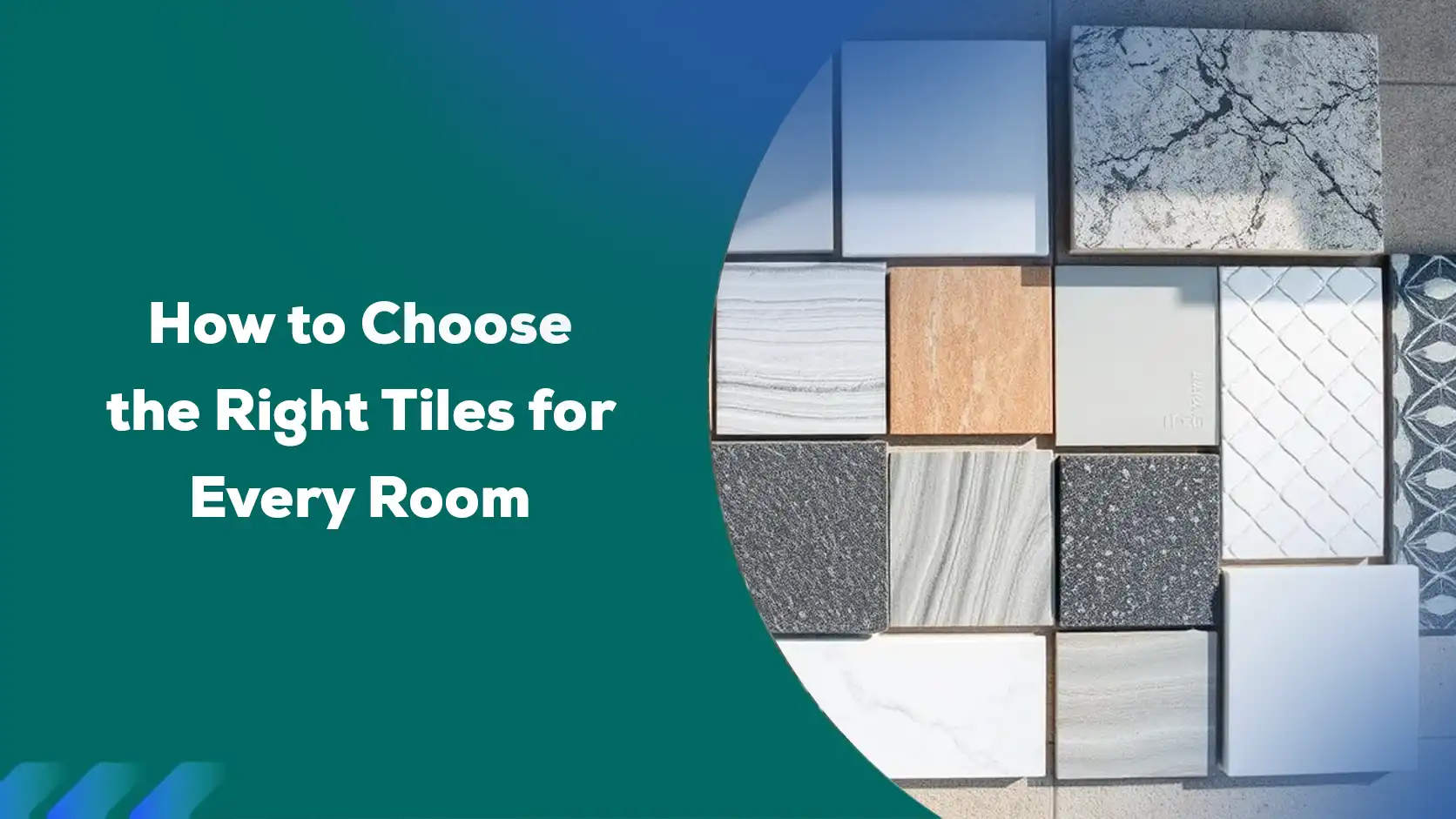
How to Choose the Right Tiles for Every Room
To choose the right tile, start with how the room is used, not how the tile looks. Check the slip rating for wet areas, the PEI wear rating for foot traffic, the water absorption for humidity or sun, and the size your floor can actually carry. Once those four specs fit, colour and finish are free choices.
For most Dubai homes that works out as matt porcelain rated R10 to R11 in bathrooms, durable porcelain at PEI 3 or higher in kitchens and living areas, and R11 or above on balconies and around pools. The sections below explain where those numbers come from, which labels cannot be trusted, and what bigger tiles demand from the floor underneath.

Key Takeaways
- Match the tile to the room’s job: grip in wet areas, hardness in busy ones.
- Use R10 to R11 for bathroom and kitchen floors and R11 or higher outdoors. R9 is enough for dry rooms.
- PEI 3 covers most home floors. PEI 4 suits entrances and heavy-use kitchens.
- Real porcelain absorbs 0.5 percent water or less. The label alone does not prove it.
- Large tiles look cleaner but need a flat base and near-full mortar coverage.
- Order about 10 percent extra and keep a spare box from the same batch.
What to Consider Before You Choose Tiles
Four specifications decide whether a tile suits a room: slip resistance, wear rating, water absorption and size. Finish and colour come after those.
Slip Resistance: R Ratings and DCOF
Slip resistance tells you how much grip a tile has when wet. Two systems matter. The R rating comes from a ramp test in which a person walks on an oiled, tilting surface until they slip, and it runs from R9 to R13. DCOF is a laboratory measure of friction on a wet surface, and 0.42 is the common benchmark for interior floors that get wet.
As a working guide for slip resistant tiles in Dubai, R9 suits dry rooms such as bedrooms and living areas. R10 suits kitchens and entrances. R11 suits bathrooms, shower floors and covered balconies. R12 and above suits open terraces and pool surrounds.
When you shop, ask for the test report and check which method produced the number. An R10 from a ramp test and a DCOF figure are different measures and cannot be swapped.
PEI Rating: How Hard-Wearing Is the Glaze
PEI scores how well a glazed tile’s surface resists abrasion, from 0 to 5. It says nothing about grip or breakage strength, so a PEI 5 tile can still be slippery.
According to HGTV’s breakdown of the scale, PEI 2 suits light traffic and bathroom floors, PEI 3 suits normal household traffic, and PEI 4 and 5 handle heavier use. For homes, PEI 3 is the practical minimum for kitchens and living areas. Pick PEI 4 for entrances and busy households.
Water Absorption: Is It Really Porcelain?
Porcelain is a tile that absorbs 0.5 percent water or less when tested under ASTM C373, and ASTM reports that only tiles meeting that limit can be certified as porcelain by the Porcelain Tile Certification Agency. Low absorption matters in Dubai bathrooms and outdoors, where steam, sun and sudden heat changes keep working on the tile body.
Ask the supplier for the absorption figure on the data sheet instead of relying on the word porcelain.
Tile Size and Finish
Use this tile size guide as a starting point.
| Tile size | Typical use | What to know |
|---|---|---|
| Mosaic (under 10 cm) | Shower floors, niches, backsplashes | Extra grout lines add grip. Slower to install. |
| 30 x 30 or 30 x 60 cm | Bathrooms, small kitchens, laundry | Easy to handle and forgiving on slightly uneven floors. |
| 60 x 60 cm | Kitchens, hallways, bedrooms | Balanced look with fewer joints. A common default. |
| 60 x 120 cm | Living rooms, open-plan areas | Clean, modern look. Needs a flat base. |
| 120 x 120 cm and above | Large living spaces, feature walls | Needs a very flat base, full mortar coverage and an experienced installer. |

Larger tiles shrink grout lines and can make a room feel bigger, but they magnify every dip in the floor. For tiles with an edge of 15 inches (38 cm) or longer, the US standard calls for a base that varies by no more than 1/8 inch over 10 feet, roughly 3 mm over 3 m, and for at least 95 percent mortar coverage in wet areas and outdoors, as Tile Letter explains.
Finish changes grip and upkeep. Matt and structured surfaces grip best and hide water marks. Polished tiles look sharp in dry living rooms but turn slick when wet. Lappato, also called semi-polished, sits in between. Gloss belongs on walls, where grip does not matter.
Best Tiles by Room
No single tile suits every room. Wet rooms need grip, kitchens need hardness and stain resistance, living areas can afford a polished look, and outdoor spaces need all of that plus heat tolerance.
Bathroom
The best tiles for a bathroom in Dubai are matt porcelain floor tiles rated R10 to R11, with R11 small-format tiles inside the shower. Porcelain’s low absorption copes with daily steam, and a matt surface keeps its grip when soap is on the floor.
Small tiles follow the slope of a shower floor better than large ones, and the extra grout lines add traction. On walls, glazed ceramic or porcelain in gloss or satin brightens a windowless room. Whatever you choose, a waterproof membrane under the tile protects the room more than the tile itself does.

Kitchen
The best kitchen floor tiles are matt or satin porcelain at PEI 3 or higher with an R10 rating. A dense porcelain body resists chips from dropped pans and does not soak up oil or juice.
Mid-tone tiles with grout close to the tile colour hide crumbs, dust and splashes better than pure white or black. Avoid polished finishes near the sink and hob, where water and oil collect. Unsealed marble etches when lemon juice or vinegar lands on it, so keep natural stone for drier rooms. Rectified 60 x 60 cm tiles with a narrow joint give a floor that wipes clean in one pass.

Living Room, Bedrooms and Hallways
Dry rooms can carry any finish, so R9 is enough and polished or semi-polished porcelain in 60 x 60 to 120 x 120 cm works well. Hallways and entrances collect grit, so PEI 4 is the safer pick there.
Natural stone belongs in this group too. Marble and granite bring veining and depth that porcelain only imitates, provided they are sealed and polished on a schedule. If you are weighing stone against porcelain, our page on marble and granite flooring in Dubai covers the trade-offs.
Outdoor Areas: Balconies, Terraces and Pool Surrounds
For outdoor floors, choose impervious porcelain rated R11 at minimum, and R12 or higher around pools and in shaded or sloped spots that stay wet. Sun, dust, sea air and sudden showers all test an exterior tile at once, and low-absorption porcelain handles that mix better than most alternatives.
Lighter shades stay cooler under bare feet than dark ones. Outdoor floors also need a slight fall toward a drain and movement joints, so heat expansion has somewhere to go. Along the coast, where salt in the air and humidity add wear, it helps to work with a team that handles both tiling and building upkeep, which is the case with our renovation and maintenance services in Dubai Marina.

Comparison Table: Room, Recommended Tile and Finish
| Room | Recommended tile | Finish | Minimum rating |
|---|---|---|---|
| Bathroom floor | Porcelain, 30 x 60 cm | Matt or structured | R10 |
| Shower floor | Porcelain mosaic | Matt | R11 |
| Bathroom walls | Glazed ceramic or porcelain | Gloss or satin | None needed |
| Kitchen floor | Rectified porcelain, 60 x 60 cm | Matt or satin | PEI 3, R10 |
| Living room | Porcelain 60 x 120 cm or natural stone | Polished or semi-polished | PEI 3, R9 |
| Bedroom | Porcelain or stone-look tile | Matt or satin | PEI 3, R9 |
| Hallway and entrance | Porcelain | Matt or semi-polished | PEI 4, R10 |
| Balcony or terrace | Outdoor porcelain | Structured matt | R11 |
| Pool surround | Outdoor porcelain | Structured | R12 or higher |
Common Tile Mistakes to Avoid
- Putting polished tile in wet rooms. It looks fine in the showroom and slides at home. Wet a sample and test it barefoot.
- Trusting the word porcelain. Check the water absorption figure on the data sheet.
- Ignoring the floor underneath. Large tiles on an uneven slab leave raised edges, known as lippage. For joints narrower than 1/4 inch, the allowable lippage is about 1/32 inch, according to the Ceramic Tile Foundation.
- Choosing under showroom lights. Take samples home and look at them in morning and evening light.
- Ordering the exact area. Cuts and breakage eat into the total, so add about 10 percent, or 15 percent for diagonal layouts. Keep a spare box from the same batch, since shade and size shift between production runs.
- Using one tile everywhere. What works in a living room fails in a shower.

Installation and Cost Notes
Installation cost depends less on the tile’s price tag than on what happens before and around it. Rates in Dubai vary widely from project to project, so ask for a quote that separates each item below.
| Cost factor | Why it changes the price |
|---|---|
| Tile size and format | Large, heavy tiles need extra hands, equipment and slower, more careful setting. |
| Surface preparation | Uneven slabs need levelling first. Adhesive cannot fix a floor that is out of flat. |
| Waterproofing | Bathrooms, balconies and wet areas need a membrane before any tile goes down. |
| Layout pattern | Diagonal, herringbone and mosaic layouts take longer and create more waste. |
| Material | Natural stone needs sealing and more skilled cutting than porcelain. |
| Removing old tile | Demolition, debris removal and cleanup add time to the job. |
Preparation is where low quotes usually cut corners. A careful installer checks flatness, confirms the fall to drains and verifies mortar coverage before grouting. For a price based on your actual rooms, our tile installation services in Dubai include a site survey and an itemised quote.
FAQs
How do I choose the right tiles?
Match the tile’s ratings to the room: R10 to R11 for wet floors, PEI 3 or higher for busy floors, and porcelain with 0.5 percent absorption or less for bathrooms and outdoors. Then check the size your floor can support, and only after that pick colour and finish.
Which tiles are best for bathrooms?
Matt porcelain tiles rated R10 to R11 are the best choice for bathroom floors, with small-format R11 tiles in the shower. Gloss or satin ceramic or porcelain works well on walls. Avoid polished floors, which turn slippery with soap and water.
What tiles are best for a kitchen floor?
Matt or satin porcelain at PEI 3 or higher with an R10 rating suits most kitchens. It resists chips, stains and heat, and it cleans easily. Skip polished finishes and unsealed natural stone near the sink and hob.
Are big tiles better than small tiles?
Neither is better everywhere. Big tiles give fewer grout lines and a cleaner look in living areas, but they need a flat floor and full mortar coverage. Small tiles grip better and follow slopes, so they suit showers and small wet areas.
What are the best slip resistant tiles in Dubai?
Choose R11 for bathrooms and covered balconies, and R12 or higher for open terraces and pools, in porcelain with a structured matt surface. Ask for the test report and the method used, because a DCOF value and an R rating measure different things.
Get Tiling Advice
Not sure which rating fits your rooms? Send us the room list, floor type and a few photos, and we will recommend a tile spec and flag any preparation issues before you buy. Start with our tile installation services in Dubai or message us directly.