How to Detect & Fix Water Leaks in Dubai Apartments & Villas: Complete Guide
Detecting a water leak in your Dubai home requires spotting the warning signs early (stains, unusually high DEWA bills, musty smells), calling in professional detection technology (thermal imaging, acoustic sensors, moisture meters), and finally repairing or replacing the affected pipework, a process that typically takes 2–7 days depending on the leak’s location and complexity.
Most leaks in Dubai properties sit behind walls, under concrete slabs, or inside AC condensation lines, which makes DIY detection nearly impossible. That’s why professional leak detection, costing roughly AED 500–2,500, ends up saving thousands in avoided structural damage. Whether you’re renting an apartment in Downtown Dubai or own a villa in Mirdif, the underlying process stays the same: isolate the source, assess the damage, repair or replace the pipe, and confirm the fix with pressure testing. For residents who’d rather not tackle this themselves, working with experienced Dubai plumbing and leak-detection specialists gets the whole job handled efficiently.
Table of Contents
What Are the Most Common Signs of a Hidden Water Leak in Your Dubai Home?
In most UAE residential properties, plumbing is embedded directly into concrete walls, ceiling plenums or sub-slab piping, so hidden water leaks often go unseen until secondary damage becomes visible.
Visual Hints
- Damp Spots & Paint Bubbling: Water running down plasterwork causes paint to bubble or peel.
- Efflorescence & Stains: White mineral powder deposits on tile grout, exterior walls or skirting boards.
- Dark Mold Growth: Black or dark green speckling along baseboards, inside bathroom vanity cabinets or around AC supply vents.
Structural Indicators
- Warped Flooring: Parquet or laminate flooring that has lifted, cupped or buckled from moisture build-up in the sub-floor.
- Hollow Tiles & Hot Spots: Tiles come loose as moisture breaks down the cement mortar or adhesive beneath them; unexplained warm spots on tile or marble floors can point to a leak in hot water supply lines within the slab.
Olfactory and Auditory Cues
- Musty Odors: An ongoing damp, mildew-like smell that persists even after cleaning, particularly in tight spaces like built-in wardrobes or laundry closets.
- Running Water Noises: A soft hiss, ticking or trickling sound behind walls or under floors when every tap, toilet and appliance is switched off.
DEWA Meter Warning Signs
Continuous meter rotation: the digital indicator or physical dial on your DEWA smart meter keeps running even when the main shutoff valve inside your unit is closed.
Table 1: Leak Warning Sign Reference Matrix
| Sign Category | Specific Indicator | Probable Leak Location | Urgency Level |
|---|---|---|---|
| Visual | Paint blistering & yellow halo stains | Concealed wall pipe or upper floor bathroom | High |
| Visual | Dark mold spots in AC vents | AC condensation drain block / overflow | Moderate |
| Structural | Warped parquet / popping floor tiles | Sub-slab pipe burst or underfloor leak | Critical |
| Auditory | Constant buzzing or dripping sound | Toilet flush valve / wall-chased pipe | High |
| Financial | Sudden DEWA bill spike (>50%) | Underground main line or underground water tank leak | Critical |
Why Is Your DEWA Water Bill Suddenly So High in Dubai?
A sudden, unexplained surge in your monthly Dubai Electricity and Water Authority (DEWA) bill is frequently the first indicator of a concealed plumbing breach. DEWA uses a progressive Slab Tariff System, meaning that as your consumption increases, the cost per cubic meter (m³) escalates significantly.
DEWA Slab Tariff Breakdown for Residential Properties
- Green Slab (1 to 27 m³/month): Standard residential rate at AED 7.70 / $2.10 USD per m³.
- Yellow Slab (27 to 54 m³/month): Moderate consumption rate at AED 8.80 / $2.40 USD per m³.
- Red Slab (Above 54 m³/month): High usage rate at AED 10.12 / $2.76 USD per m³.
Table 2: Average Monthly Consumption Benchmarks in Dubai
| Property Type | Occupancy | Normal Water Bill (AED / USD) | Leaking Property Bill (AED / USD) |
|---|---|---|---|
| 1-BR Apartment | 1–2 Persons | AED 150 – 250 / $41 – $68 USD | AED 700 – 1,800 / $191 – $490 USD |
| 2-BR Apartment | 2–4 Persons | AED 300 – 450 / ~$82 – $123 USD | AED 1,200 – 3,000 / ~$327 – $817 USD |
| 3-BR Villa | 4–6 Persons | AED 600 – 1,200 / $163 – $327 USD | AED 2,500 – 6,500 / $681 – $1,770 USD |
| 5-BR Luxury Villa | 6+ Persons + Garden | AED 1,500 – 2,800 / $408 – $763 USD | AED 7,000 – 18,000+ / $1,907 – $4,904+ USD |
How to Verify a Leak Using Your Smart Meter
- Turn off all faucets, water-using appliances (washing machines, dishwashers), and irrigation systems.
- Locate your DEWA meter outside your villa boundary wall or inside the floor service closet of your apartment building.
- Check the screen or digital pulse register — if the flow indicator shows active water movement despite zero usage inside, you have an active downstream leak.
- Use the DEWA High Water Usage Alert feature on the official DEWA Smart App to receive automated SMS alerts when continuous flow is detected over 48 hours.
Where Do Water Leaks Most Commonly Occur in Dubai Apartments & Villas?
Plumbing infrastructure in Dubai faces unique operational pressures, including high salinity, extreme ambient temperatures, and thermal expansion. Different property layouts present distinct risk zones:
- Apartment Risk Zones: Toilet push-plate mechanisms, concealed bathroom tile piping, and kitchen sink flexible hoses.
- Villa Risk Zones: Under-slab main water lines, outdoor irrigation solenoid valves, and underground concrete storage tanks.
- Air Conditioning (AC) Risk Zones: Clogged condensate drain pans, failing condensate pumps, and degraded duct insulation.
1. Bathroom Water Leak Points
- Concealed Toilet Cisterns: Hanging toilet systems with wall-embedded flush boxes are notoriously prone to silent internal valve failures, allowing up to 300 liters of water per day to trickle unnoticed into the bowl.
- Flexible Hose Connectors: Braided stainless steel hoses under sinks and bidet sprayers (shattafs) degrade over time due to high water pressure and rust.
- Shower Tray Seals: Cracked silicone seals allow water to seep behind wall tiles and floor screed, damaging the ceiling of the unit below.
2. Kitchen & Appliance Connections
- Washing Machine & Dishwasher Inlets: Vibration causes threaded fittings to loosen over time.
- Under-Sink Reverse Osmosis (RO) Filters: Pressurized plastic tubes and push-fit connectors on filtration units are common failure points.
3. Air Conditioning (AC) Condensation Lines
In Dubai’s intense atmospheric humidity, a residential AC system can generate 20 to 50 liters of condensation daily.
- Primary Tray Clogs: Dust, mold, and debris clog primary condensation drain lines, forcing water to overflow directly into ceiling plenums.
- Uninsulated Ducts: Poor insulation around chilled water lines causes atmospheric moisture to condense and drip through drywall ceilings.
4. Wall-Embedded Pipes & Slab Leaks
Properties across Dubai use specialized piping systems — older constructions rely on copper or galvanized iron, while modern developments favor Cross-linked Polyethylene (PEX) or Polypropylene Random (PPR) piping. Thermal expansion caused by fluctuating water heater usage causes stress fractures at elbow joints embedded inside concrete slabs.
5. Roof & Underground Tank Leaks (Villas)
Villas in established suburban areas often experience structural shifting.
- Soil Expansion Impact: Suburban developments such as Al Quoz, Mirdif, Arabian Ranches, and Jumeirah Village Circle (JVC) frequently report higher rates of sub-slab pipe shearing due to shifting water tables and soil expansion.
- Underground Water Tanks: Cracks in underground concrete storage tanks lead to continuous loss of mains water before it reaches the booster pump.
Given how area-specific these issues are, a plumber experienced with your community’s particular challenges can make all the difference.
How Do You Detect a Water Leak in Your Walls or Under the Slab?
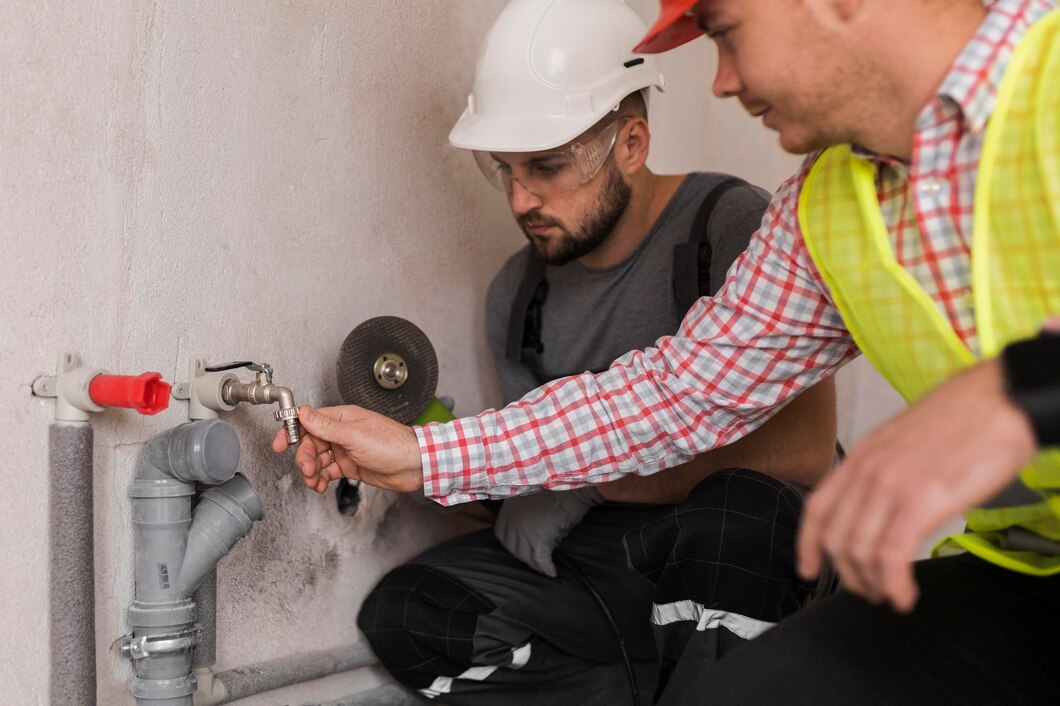
Attempting to locate a leak by smashing concrete walls or digging up marble flooring creates unnecessary structural damage and exorbitant restoration costs. Modern leak detection relies on non-destructive technology (NDT):
- Thermal Imaging Cameras: Detect temperature anomalies under wall and slab surfaces.
- Acoustic Sensors: Amplify sound frequencies of pressurized water escaping from structural fractures.
- Tracer Gas (Helium/Hydrogen Blend): Injected into drained pipes; the gas rises through concrete micro-cracks for precise pinpointing.
Advanced Non-Destructive Diagnostic Technologies
- Infrared Thermal Imaging: High-resolution thermographic cameras detect surface temperature differentials caused by moisture accumulation behind plaster or under flooring. Hot water leaks show as bright red/orange plumes, while cold water or AC leaks appear as deep blue anomalies.
- Acoustic Ground Microphones: Highly sensitive listening equipment amplifies the frequency of pressurized water escaping from underground pipes or slab fractures, filtering out ambient urban noise.
- Tracer Gas Detection: Technicians drain the pipe network and inject a safe, inert mixture of 5% hydrogen and 95% nitrogen. Because the gas molecules are smaller than water, the gas travels through micro-cracks in concrete slabs, letting electronic sensors pinpoint the exact leak location.
- Digital Moisture Meters: Pin and pinless moisture sensors measure the exact dampness percentage within masonry, concrete, and drywall structures.
Table 3: DIY Leak Detection vs. Professional Diagnostic Services
| Metric / Parameter | DIY Detection Methods | Professional NDT Diagnostic |
|---|---|---|
| Primary Method | Visual check, meter monitoring, food dye in toilet | Thermal imaging, acoustic profiling, tracer gas |
| Accuracy Level | Low to Moderate (identifies symptoms, not source) | Pinpoint accuracy (± 5 cm) |
| Structural Damage Risk | High (requires exploratory wall cutting) | Zero (non-destructive inspection) |
| Time Required | 2 – 6 Hours | 45 – 90 Minutes |
| Cost Range | AED 20 – 100 ($5 – $27 USD) | AED 450 – 1,200 ($123 – $327 USD) |
What’s the Difference Between a Ceiling Water Leak Repair and Other Water Damage?
A water leak originating from a ceiling requires immediate containment compared to floor-level moisture issues, due to structural safety concerns and rapid mold colonization.
Structural Integrity & Safety Hazards
Ceilings in Dubai residences typically consist of gypsum board suspended from a concrete floor slab by steel wire hangers. When a ceiling leak occurs — whether from an upper neighbor’s bathroom failure or a clogged AC drain pan — the gypsum board absorbs water, softens, gains considerable weight, and can collapse suddenly without warning. Water dripping through ceiling plenums also frequently contacts electrical conduits, lighting fixtures, and exhaust fans, creating acute short-circuit and fire risks.
Immediate vs. Long-Term Damage Risks
- Immediate Risks (0–24 Hours): Ceiling sag, structural drywall failure, electrical short circuits, damage to high-value furniture, and parquet floor destruction underneath.
- Long-Term Risks (24–72+ Hours): Colonization of Aspergillus and toxic mold within the AC ductwork, structural corrosion of concrete rebar, drywall disintegration, and persistent foul odors.
Reference: Dubai Municipality Official Building Code Guidelines.
How Much Does Professional Water Leak Detection Cost in Dubai?
The cost of professional water leak detection in Dubai varies based on property size, architectural layout (apartment vs. sprawling villa), leak location, and the diagnostic equipment required. Standard service packages include non-destructive testing, thermal scanning, acoustic analysis, and a comprehensive technical inspection report for insurance or landlord submission.
Table 4: Service Pricing Breakdown in Dubai
| Service Type | Cost Range (AED) | Cost Range (USD) | Scope of Work Included |
|---|---|---|---|
| Basic Diagnostic Inspection | AED 300 – 500 | $82 – $136 USD | Visual check, pressure check, digital moisture readings in 1 zone. |
| Full Thermal Imaging Scan | AED 450 – 850 | $123 – $231 USD | Whole-property thermography scan, AC duct & wall leak pinpointing. |
| Acoustic & Slab Leak Detection | AED 750 – 1,500 | $204 – $408 USD | Deep slab acoustic profiling, tracer gas pressure testing, exact map. |
| Comprehensive Villa Audit | AED 1,200 – 2,500 | $327 – $681 USD | Main water lines, irrigation lines, swimming pool, and interior pipes. |
| Emergency Night Service Callout | AED 500 – 900 | $136 – $245 USD | Rapid response diagnostic, main line isolation, temporary containment. |
Factors Influencing Diagnostic & Repair Costs
- Property Layout: Pinpointing leaks in high-rise towers (such as in Dubai Marina or Downtown) involves multi-unit riser checks, whereas villas require exterior main line and ground slab inspections.
- Surface Restoration Needs: Simple exposed pipe repairs cost significantly less than jobs requiring marble floor tile removal, drywall cutting, re-tiling, and repainting.
- Warranty Terms: Reputable plumbing contractors in Dubai typically provide a 3 to 12-month warranty on pipe repair points and waterproofing restoration work.
How Long Does It Actually Take to Find & Fix a Water Leak in Dubai?
Understanding the repair timeline allows property owners and tenants to plan effectively and minimize living disruptions.
Table 5: Estimated Repair Timeline Matrix
| Leak Scenario | Diagnostic Phase | Repair Phase | Drying & Restoration | Total Duration |
|---|---|---|---|---|
| Simple Exposed Leak (sink flex-hose, shattaf valve) | 15–30 Mins | 30–60 Mins | N/A | 1–2 Hours |
| AC Condensation Overflow | 30–45 Mins | 1–2 Hours | 12–24 Hours | 1 Day |
| Concealed Wall Leak (bathroom riser, shower tile) | 1–2 Hours | 3–6 Hours | 24–48 Hours | 2–3 Days |
| Under-Slab Main Pipe Burst | 2–4 Hours | 1–2 Days (excavation) | 3–5 Days (concrete curing & tiling) | 3–7 Days |
Typical Workflow Timeline
- Phase 1 – Diagnostics (30 Mins–4 Hours): Thermal imaging, tracer gas analysis, and pressure testing.
- Phase 2 – Isolation & Repair (1 Hour–2 Days): Pipe section replacement, socket fusion welding, and fitting installation.
- Phase 3 – Testing & Restoration (12 Hours–5 Days): Hydrostatic pressure verification, dehumidification, and surface retiling/painting.
What’s the Step-by-Step Process for Water Leak Repair in Your Bathroom?
A standard bathroom leak repair requires systematic execution to prevent recurrent leaks and ensure full seal integrity.
Step-by-Step Execution Sequence
- Water Isolation: Shut off the primary isolation valve and open taps to drain excess pressure.
- NDT Diagnostics: Pinpoint the non-destructive leak location using thermography scans.
- Targeted Access: Cut minimal plaster or tiles to expose the pipe rupture without wide-scale damage.
- Material Replacement: Fuse replacement PPR or PEX piping using high-temperature heat-welding tools.
- Pressure Testing: Perform a hydrostatic pressure test at 6–10 bar for at least 60 minutes to verify zero loss.
- Waterproofing & Tiling: Apply a liquid waterproofing membrane, re-lay floor/wall tiles, apply grout, and seal all joints.
Should You Call Your Dubai Landlord, DEWA, or a Private Contractor?
Who to contact depends on the exact situation of the leak and property ownership governance in the UAE:
- Call DEWA (Hotline 991): If the leak is inside your main meter, the main street line, or within the external meter vault.
- Call Landlord / Facilities Management: For major plumbing failures over AED 500, structural slab leaks, or building riser pipe problems.
- Call a Private Contractor: For active internal emergencies, villa line issues, and minor tenant maintenance under AED 500.
Dubai Electricity & Water Authority (DEWA)
- When to Call DEWA (Emergency Hotline: 991): DEWA is only responsible for municipal infrastructure up to the main water meter connection outside your property line. If the leak is in the underground main before the meter or within the meter assembly, the repair is DEWA’s responsibility.
- Internal Responsibility: Any leak after the meter (within your villa boundary or apartment piping) is the sole financial responsibility of the property owner or tenant.
Tenant vs. Landlord Maintenance Rules (RERA Guidelines)
In Dubai the landlord-tenant relationship is governed by Law No. 26 of 2007 (and amended Law No. 33 of 2008):
- Landlord Responsibility: Major structural repairs, such as main plumbing riser leaks, concealed slab leaks, water heater replacement and main pump replacements, are the landlord’s responsibility unless otherwise specified in the contract. The usual contract threshold is that single repairs over AED 500 / $136 USD fall to the landlord.
- Tenant Responsibility: The tenant is typically responsible for minor consumable maintenance such as replacing worn-out shattaf hoses, changing faucet aerators, or clearing simple drain line clogs (costing under AED 500 / $136 USD).
How Can You Prevent Water Leaks in Your Dubai Home?
The cost of preventive maintenance is much lower than emergency leak restoration and structural repair.
Recommended Prevention Checklist
- Bi-Annual AC Drain Flushing: Every 6 months, clean primary and secondary AC drain trays and flush lines with an anti-bacterial solution to prevent summer condensation backups.
- Annual Water Heater Inspection: Inspect thermal expansion valves and anti-corrosion sacrificial anode rods on ceiling-mounted water heaters once a year.
- Replace Flexible Hoses Every 2 Years: Proactively swap braided rubber flexi-hoses under sinks and bidets for high-pressure stainless steel core lines.
- Adjust the Water Pressure Regulator: Make sure the pressure-reducing valve (PRV) in your villa or apartment is set to 2.5–3.5 bar — the higher the municipal line pressure, the faster pipe joints get stressed.
- Enable Smart Living Features: When traveling, activate DEWA’s Away Mode on the DEWA Smart App for daily automated monitoring and instant notifications of anomalous usage.
What Are the Key Takeaways for Dubai Tenants and Landlords?
- Watch the Signs Early: Damp patches, warped flooring, musty smells, and a spiking DEWA bill are the earliest and most reliable indicators of a hidden leak.
- Go Non-Destructive First: Professional thermal imaging and acoustic detection (AED 300–2,500) pinpoint the exact leak location without smashing walls or floors.
- Know Who Pays: Repairs over AED 500 are generally the landlord’s responsibility under RERA guidelines; smaller consumable fixes fall on the tenant.
- Prevent, Don’t Just React: Bi-annual AC drain flushing and periodic hose replacement cost a fraction of emergency slab-leak repair.
Frequently Asked Questions About Water Leak Detection & Repair in Dubai
How can I tell if I have a hidden water leak in my apartment?
Watch for mysterious wet spots on walls, flaking paint, warm floor tiles, an ongoing musty odor, or constant water running sounds behind fixtures. Also keep an eye on your DEWA bill each month; an unexpected spike in consumption is a key warning sign.
What is the price of water leak detection in Dubai?
Non-destructive water leak detection services cost between AED 300 and AED 850 ($82–$231 USD) for standard apartments, while full acoustic and tracer gas diagnostics for large villas range from AED 750 to AED 2,500 ($204–$681 USD).
Why is my DEWA water bill so high suddenly?
A sudden spike usually means water is flowing continuously from a hidden rupture — a leaking toilet flush valve, a burst sub-slab pipe, an underground tank crack, or a failing irrigation solenoid. DEWA’s slab tariff structure multiplies the financial impact as your total monthly volume grows.
How long does it take to locate and repair a water leak?
Diagnostic scans with thermal imaging take from 45 to 90 minutes. Simple fixture repairs take 1 to 2 hours, but more extensive repairs involving hidden walls or under the slab can take 2 to 5 days, including time for drying, plastering and retiling.
Is a water leak in Dubai covered by home insurance?
Most comprehensive home building insurance policies in the UAE cover “escape of water” damage to property structures and belongings. Insurance, however, will usually pay for the consequential water damage, not for the worn-out pipe fitting itself. Check the terms of your individual policy.
Is it possible to sue my landlord for water damage in Dubai?
Tenants can approach the Rental Dispute Settlement Center (RDSC) at Dubai Land Department to file a formal case if a landlord fails to attend to a reported major structural leak that damages personal property or renders living conditions uninhabitable.
What is a slab leak and how bad is it?
A slab leak occurs when a pressurized water pipe ruptures within or beneath a concrete foundation slab. Left unaddressed, it can undermine structural integrity and lead to serious, costly damage.
Will my property value go down if I have had a water leak?
Unmended water damage can cause structural weakening or mold infestation, which lowers market value and can cause pre-purchase home inspections to fail. However, once professionally repaired with verified waterproofing and certified pressure testing, the property’s value remains protected.
Can I find a leak without calling a professional?
You can run basic isolation tests: turn off all taps and see if your DEWA meter dial is still moving, or put food dye in your toilet cistern to check for silent flush valve leaks. Discovering hidden leaks inside walls or under slabs without damaging the property, though, requires specialized thermal and acoustic tools.
If I find a big leak, what do I do first?
- Turn off the main water isolation valve immediately (usually found under the kitchen sink, in the bathroom utility panel, or near the external DEWA meter).
- Switch off the power supply circuit breakers for the affected rooms to avoid electrical short circuits.
- Take photo/video evidence for insurance purposes, and contact a certified professional plumber or your property manager.