Mistakes To Avoid When Installing Tiles In Dubai
The tile installation mistakes that cause the most damage in Dubai are the wrong adhesive for high heat, missing movement joints, patchy adhesive coverage, tiling onto damp or dusty screed, weak waterproofing and poor grout spacing. Nearly every cracked, hollow or lifting tile we inspect traces back to one of these six.
Heat on its own rarely breaks a well-laid floor. Trouble starts when the tiled surface has no room to move, or when the bond underneath was never complete. Dubai exposes those shortcuts quickly, often within the first summer. Below you will find what goes wrong, how to spot it early, which tiles and adhesives suit local conditions, and what repairs typically cost.
Key Takeaways
- Use a C2TE S1 adhesive for porcelain in most Dubai homes, and S2 for large formats, terraces and sunlit floors.
- Leave a gap at every wall and add sealant-filled movement joints. Grout is rigid and is not a movement joint.
- Aim for at least 80% adhesive contact in dry rooms and 95% in wet areas, outdoors and under stone.
- Only tile onto screed that is cured, clean, primed and flat, and flood test waterproofing before tiling.
- Porcelain, with water absorption of 0.5% or less, is the safest all-round tile for the Dubai climate.
Why Proper Tile Installation Matters in Dubai
Proper installation matters more in Dubai because tiles here face bigger and faster temperature swings than in most cities, so any weakness in the bond or layout shows up quickly. A job that would last decades in a mild climate can fail here in one or two summers.
Picture a living room with a west-facing window. By late afternoon, tiles in the sun are far hotter than the air-conditioned tiles a few metres away. Tile, adhesive, screed and slab each expand at slightly different rates. If they are locked together with no joints and an incomplete bond, the stress has two ways out: upward, or through the tile.
What Tile Failure Looks Like in a Dubai Home
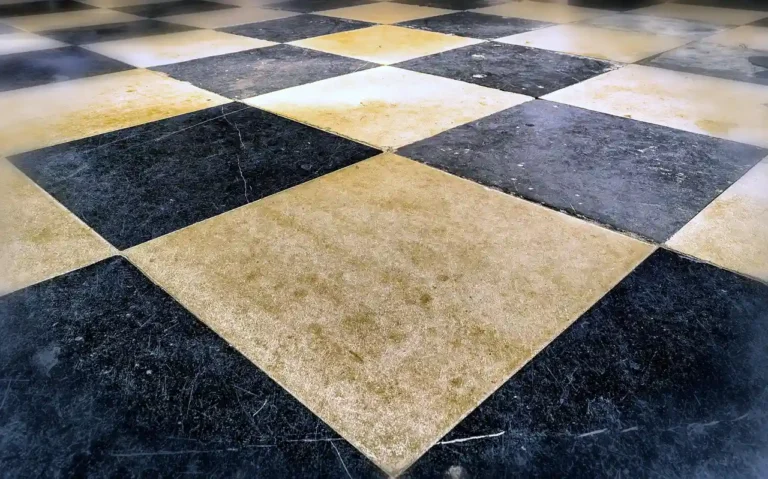
Failures follow a predictable order. First comes a hollow sound when you tap a tile with a coin. Hairline cracks then run across several tiles in a straight line, grout crumbles along one run, and finally tiles lift into a ridge, which installers call tenting. Catching it at the hollow-sound stage keeps the repair small.
Tiling Mistakes at a Glance
This table sums up each mistake, the first sign you will notice and what a correct installation does instead.
| Mistake | Early warning sign | Why Dubai makes it worse | Correct practice |
|---|---|---|---|
| Wrong adhesive | Tiles lift with bare backs | Adhesive skins over fast in heat | C2TE S1 or S2, small batches |
| No movement joints | Tenting, straight-line cracks | Daily heat expansion | Perimeter gap and field joints |
| Poor coverage | Hollow sound, cracked corners | Voids trap heat and moisture | 80% to 95% contact |
| Bad substrate | Uneven tiles, weak bond | Fine sand dust, rushed curing | Cured, primed, flat base |
| Weak waterproofing | Damp grout, leaks below | High humidity | Full membrane, flood test |
| Grout and spacing errors | Chipped edges, cracked grout | No tolerance for movement | Correct joints, levelling clips |
The 6 Most Common Tiling Mistakes
These six mistakes cause most tile failures in Dubai homes, listed in the order we come across them most often.
1. Choosing the Wrong Tile Adhesive for Dubai Heat
The best tile adhesive for most Dubai homes is a polymer-modified cement adhesive classified C2TE S1 under EN 12004. For large-format tiles, terraces, balconies and pool surrounds, choose a more flexible S2 adhesive.
In that code, C means cement-based, 2 means improved adhesion, T means reduced slip, E means extended open time, and S1 or S2 shows how far the adhesive can flex, as set out in Sika’s selection guide. Technical guidance from Wacker states that S1 adhesives are required for low-absorption porcelain, formats such as 30 x 60 cm and tile-over-tile work, which covers most Dubai jobs.
Heat adds a second risk called skinning, where adhesive dries on the surface before the tile is pressed in. The tile looks fine but barely bonds. Good installers mix with cool water, keep bags out of the sun and spread small areas at a time.
| Adhesive class | What it offers | Where it suits in Dubai |
|---|---|---|
| C1 | Standard adhesion | Small ceramic wall tiles indoors |
| C2TE | Improved adhesion, no slip, longer open time | Ceramic and small porcelain indoors |
| C2TE S1 | Adds flexibility | Porcelain floors and walls, tile over tile |
| C2TE S2 | High flexibility | Large slabs, terraces, pool decks |
2. Leaving Out Movement Joints (Why Tiles Keep Lifting)
Tiles keep lifting in Dubai mainly because the floor has no room to expand. Laid hard against walls, columns and door frames, the tiles build pressure every hot afternoon until the weakest bond gives way.
These joints are not only for commercial buildings. A TileLetter case study describes a home whose floor tented under sunlight from skylights and had to be fully replaced because it had no perimeter or field joints. The fix is simple at the start: a gap under the skirting, flexible sealant at corners and thresholds, and slab joints carried through the tiles.
3. Poor Adhesive Coverage and Spot Fixing
A hollow sound or cracked corner usually means the tile is not fully supported. Spot fixing on a few blobs of adhesive leaves air pockets that crack under load and collect moisture.
The installer should match the trowel notch to the tile, comb ridges in one direction, back-butter large tiles and press each tile across the ridges, as Stone World’s summary of the ANSI rules describes. Lifting a freshly set tile now and then is the only real check.
4. Tiling Over Damp, Dusty or Uneven Screed
Adhesive can only bond as well as the surface beneath it. Screed that is still drying, fine sand dust, gypsum residue or an uneven base weakens the bond before the first tile goes down.
Dust is a constant in Dubai, so the base should be vacuumed, primed and checked with a long straightedge, with dips filled using levelling compound. Treat any schedule that tiles over screed laid a day or two earlier as a warning sign. On bathroom walls, replace standard gypsum board with cement board.
5. Skipping or Rushing Waterproofing
Tile and grout are not waterproof on their own. Without a membrane, water in bathrooms, balconies and roof terraces soaks into the screed, breaks down the adhesive and can reach the ceiling below.
A reliable job runs the membrane across the whole wet area and up the walls, tapes corners and drains, slopes the floor to the drain and flood tests for 24 to 48 hours. Our guide on how to tile a floor and wall explains each stage in order.
6. Getting Grout, Spacing and Levelling Wrong
Joints that are too narrow, the wrong grout and poorly levelled large tiles cause chipped edges, cracked grout and lippage. Always follow the tile maker’s minimum joint width, even for rectified tiles. Use a levelling clip system on large formats, and choose epoxy grout in showers and splashbacks, where it resists moisture and stains far better than cement grout.
Choosing Tiles for Dubai’s Climate
Porcelain is the best tile for Dubai’s climate on most floors and every outdoor area, because it absorbs almost no water and handles heat and humidity without cracking. Glazed ceramic suits indoor walls, and natural stone suits sealed interior spaces.
Under ANSI A137.1, a tile only counts as porcelain if its water absorption is 0.5% or less, as the American National Standards Institute explains. Ask for the technical data sheet before buying, since some tiles sold as porcelain fall short.
| Tile type | Water absorption | Best use in Dubai | Watch out for |
|---|---|---|---|
| Porcelain | 0.5% or less | Floors, bathrooms, terraces, pool decks | Polished finishes are slippery when wet |
| Glazed ceramic | Higher; wall grades can exceed 10% | Indoor walls, splashbacks | Too soft for floors or outdoors |
| Marble and natural stone | Varies by stone | Living areas, feature walls | Needs sealing and white adhesive |
| Glass or porcelain mosaic | Very low | Showers, pool lines | Many joints, so use epoxy grout |
Outdoor Areas, Terraces and Pool Decks
Choose textured, anti-slip porcelain in lighter colours, which stay cooler underfoot than dark tiles. Use full-bed S2 adhesive, tighter joint spacing and a slope that stops water pooling.
Indoor Floors and Walls
Large porcelain formats mean fewer grout lines but demand a very flat base. If sustainability matters to you, our article on eco-friendly tile materials covers lower-impact options that still cope with local conditions.
Plan Outdoor Tiling Around the Heat
From 15 June to 15 September 2026, the UAE midday break bans outdoor work in direct sun from 12:30 pm to 3:00 pm, Gulf News reports, with fines of AED 5,000 per worker, according to WAM. Early morning work also helps adhesive and grout cure properly.
Cost of Fixing Tiling Mistakes
Fixing tiling mistakes in Dubai ranges from a few hundred dirhams for a handful of loose tiles to several thousand for a full floor or bathroom re-lay. Costs rise the longer you wait, because damage spreads into the adhesive, screed and waterproofing.
| Repair | Indicative cost (AED) | Notes |
|---|---|---|
| Re-fix a few loose tiles | 200 to 600 per visit | Only if the base is sound |
| Regrouting | 25 to 60 per m² | Common in showers and balconies |
| Retrofit movement joints | 15 to 40 per linear metre | Grout replaced with sealant |
| Remove and re-lay floor tiles | 90 to 160 per m² plus tiles | Includes removal and basic prep |
| Strip, waterproof and retile a bathroom | 5,000 to 12,000 | Excludes tiles and sanitaryware |
These are indicative 2026 ranges based on typical Dubai contractor rates, and a site survey sets the final price. Keep five to ten percent spare tiles from the original batch, because a discontinued range can turn a small repair into a full room. For wider budgeting, see our guide to home renovation cost in Dubai.
FAQs
What are common tiling mistakes?
The most common tiling mistakes are the wrong adhesive, missing movement joints, incomplete adhesive coverage, a poor substrate, skipped waterproofing and joints that are too tight. Dubai heat makes each one fail sooner.
How do I stop tiles cracking in Dubai heat?
Give tiles room to move and a full bond. Use a flexible S1 or S2 adhesive, achieve 80% to 95% coverage, leave a perimeter gap and add sealant-filled movement joints on larger or sunlit floors.
What tile adhesive is best for Dubai?
A C2TE S1 cement-based adhesive suits most porcelain and ceramic tiling in Dubai. Use S2 for large slabs and outdoor areas, and white adhesive under light natural stone.
Why do my tiles keep lifting?
Tiles lift when they cannot expand or the adhesive never fully bonded. Missing joints, spot fixing, skinned adhesive and dusty screed are the usual causes, so re-fixing single tiles rarely lasts without fixing the joints.
What are the best tiles for Dubai climate?
Porcelain is best because it absorbs 0.5% water or less and resists heat, humidity and wear. Use textured porcelain outdoors, ceramic on indoor walls and sealed stone indoors only.
Can I tile over existing tiles in Dubai?
Yes, if the old tiles are firmly bonded, flat and uncracked. Clean and prime the surface, use a flexible S1 adhesive and check door clearances first.
Book a Professional Tiling Service
If you hear hollow tiles, see cracks or are planning a new floor, start with a proper survey of the substrate, adhesive and joints. Our tile installation services in Dubai cover floor and wall tiling, repairs, regrouting and waterproofing for apartments and villas, with adhesives and joint layouts matched to local conditions.
Send us a few photos and we will tell you honestly whether it needs a quick re-fix or a full re-lay. Sharjah homeowners can reach the same team through our renovation and maintenance service in Sharjah.