How to Unblock a Sink: Easy and Quick Steps
A blocked sink is one of those household problems that always seems to happen at the worst time. You’re rushing through the morning routine, and suddenly the bathroom sink is filling up with water that has nowhere to go. Or you’re cleaning up after dinner and notice the kitchen sink is not draining, yet again. Sound familiar?
The good news is that most blocked drains are completely fixable at home, without special tools, without specialist skills, and without calling a plumber. This guide walks you through everything you need: why sinks get blocked in Dubai homes, how to unblock a sink yourself using simple step-by-step methods, and exactly when it’s time to call a professional drain cleaning service.
Whether you’re a homeowner in Jumeirah, a tenant in JVC, or managing an apartment in Business Bay, these practical steps apply to virtually any sink drain blockage situation in 2026.
Why Do Sinks Get Blocked in Dubai Homes?
Before jumping into fixes, it helps to understand why the problem happens in the first place. In most Dubai households, sink blockages come down to a handful of common causes:
- Grease and fat buildup: In kitchen sinks, cooking oil and food residue cool inside the pipe and slowly coat the drain walls, eventually causing a grease blockage in the sink that restricts water flow entirely.
- Hair clogs in bathroom sinks: Bathroom sinks accumulate hair, soap scum, and skin care products over time. A hair clog in the bathroom sink is probably the most common drain issue in residential properties across Dubai.
- Soap and toothpaste residue: These bind with the minerals in Dubai’s hard water supply and form a sticky layer inside drain pipes over time.
- Foreign objects: Jewellery, bottle caps, cotton buds, and small items accidentally dropped down the drain are frequent culprits.
- P-trap buildup: The curved section of pipe beneath your sink (called the P-trap) is designed to hold water and block sewer gases, but it also collects debris that eventually becomes a solid blockage.
- Hard water mineral deposits: Dubai’s water supply is notably hard. Over time, limescale and mineral buildup inside pipes narrows the effective diameter of your drain, leading to a slow-draining sink even when nothing obvious has been dropped or washed down.
Understanding the cause helps you choose the right fix. If you’re also doing a broader home maintenance review, our Seasonal Home Maintenance Checklist for Dubai Homes in 2026 covers plumbing checks alongside every other maintenance task worth doing throughout the year.
How to Unblock a Sink: Step-by-Step Methods
These methods are ranked from simplest to most hands-on. Start from the top and work your way down; most blockages clear up well before you reach the later steps.
We’re going to cover the following effective methods to unblock a sink:
- Method 1: Boiling Water
- Method 2: Baking Soda and Vinegar
- Method 3: Use a Plunger for the Sink
- Method 4: Clean the P-Trap
- Method 5: Use a Drain Snake Tool
- Method 6: Drain Cleaning Chemicals
Let’s now explain how you can unblock your sink with these methods.
Method 1: Boiling Water (The First Thing to Try)
This is the easiest drain blockage solution, and it works surprisingly well on grease and soap buildup.
What you need: A kettle or pot of boiling water.
Steps:
- Boil a full kettle of water.
- Pour it slowly down the drain in two or three stages, pausing a few seconds between each pour. This gives the hot water time to attack the blockage rather than simply flushing cold standing water around it.
- Run the tap and check whether the water is draining freely.
Important note: Do not use boiling water if you have PVC (plastic) pipes, as the high heat can soften and damage them. Use very hot tap water instead.
This method works well on fresh grease blockages. If your sink drain is not working due to a deeper or older clog, move to the next step.
Method 2: Baking Soda and Vinegar
The chemical reaction between baking soda (sodium bicarbonate) and white vinegar creates a fizzing action that breaks down organic buildup inside the pipe. It’s one of the most effective and safest DIY drain cleaning methods available.
What you need: Half a cup of baking soda, half a cup of white vinegar, a drain cover or cloth, and hot or boiling water.
Steps:
- Remove any standing water from the sink first.
- Pour the baking soda directly down the drain.
- Follow immediately with the white vinegar.
- Cover the drain opening with a cloth or plug to force the fizzing reaction downward into the blockage, rather than allowing it to escape upward.
- Wait 15 to 20 minutes.
- Flush with hot water (or boiling water if your pipes allow) to wash everything through.
Repeat once more if needed. This method is gentle, chemical-free, and safe for all pipe types. It’s also effective against foul smell from sink drains caused by organic debris decomposing inside the pipe.
Method 3: Use a Plunger for the Sink
If the baking soda and vinegar method didn’t fully clear the blockage, a cup plunger is your next tool. The standard rubber cup plunger works well on sinks.
What you need: A cup plunger.
Steps:
- Remove the drain stopper if your sink has one.
- Fill the sink with just enough water to cover the rubber cup of the plunger; this creates the suction seal needed.
- Place the plunger over the drain opening and press down firmly to form a seal.
- Plunge with a quick, forceful up-and-down motion, about 10 to 15 strokes.
- Pull the plunger sharply upward on the final stroke to break the suction and dislodge the clog.
- Run the water and check drainage.
If you have a double basin kitchen sink, block the second drain opening with a wet cloth before plunging, which prevents the pressure from escaping through the other basin.
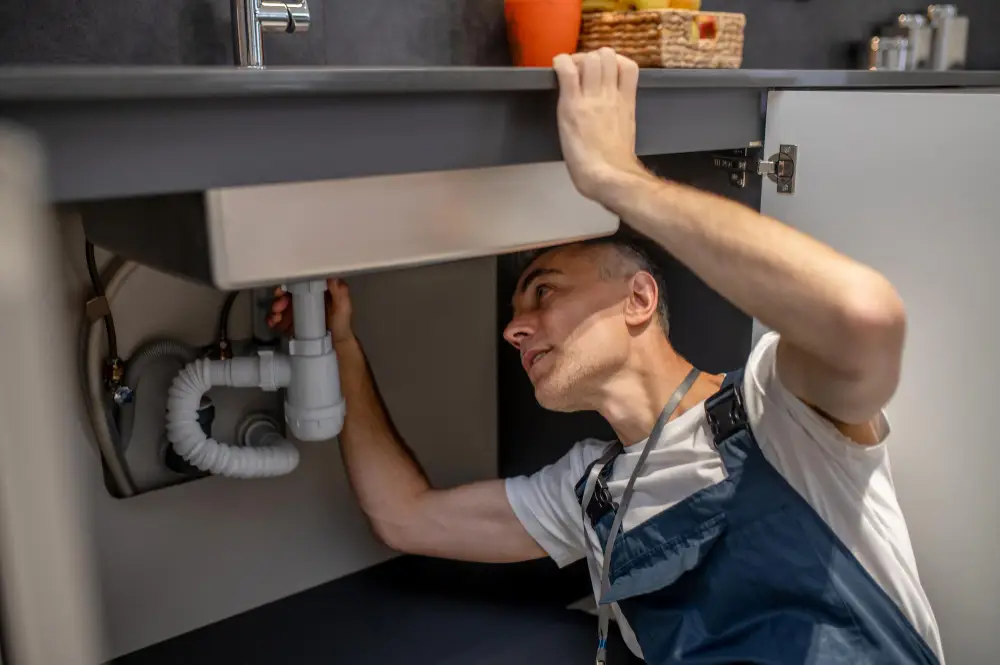
Method 4: Clean the P-Trap
If the blockage is stubborn, it may be sitting inside the P-trap, the U-shaped pipe visible under your sink. This is where most solid debris (food scraps, hair, dropped objects) accumulates over time.
What you need: A bucket, rubber gloves, a wrench or pliers, and an old towel.
Steps:
- Place a bucket under the P-trap to catch water and debris.
- Unscrew the slip nuts on either side of the curved section by hand or with pliers. Most modern P-traps are plastic and loosen by hand.
- Carefully remove the P-trap and empty its contents into the bucket.
- Clean out any debris inside the trap: hair, soap sludge, grease, or small objects.
- Rinse the trap thoroughly before reattaching it.
- Tighten the slip nuts firmly and run water to check for leaks.
P-trap cleaning is more hands-on than the earlier methods, but it resolves most bathroom sink clogged situations where the blockage has been building up for weeks or months.
Method 5: Use a Drain Snake Tool
For deeper blockages that sit further down the pipe, beyond the P-trap, a drain snake tool (also called a plumber’s auger) is the right solution. You can buy a basic hand-operated drain snake at most hardware stores in Dubai for around AED 30 to 60.
Steps:
- Feed the coiled end of the snake into the drain opening.
- Rotate the handle clockwise as you push it further into the pipe.
- When you feel resistance, you’ve reached the blockage. Continue rotating to break it up or hook it so you can pull it out.
- Pull the snake back slowly, bringing the clog with it.
- Run hot water to flush any remaining debris.
A drain snake is particularly effective on hair clogs in bathroom sinks and on blockages located further down the pipe than a plunger can reach.
Method 6: Drain Cleaning Chemicals (Use With Caution)
Commercial drain cleaning chemicals are widely available in Dubai supermarkets and hardware stores. They use strong alkali or acid compounds to dissolve organic matter inside the pipe.
They can be effective, but here is what you need to know before using them:
- Always read the product instructions and wear rubber gloves.
- Never mix different drain cleaning products; the combination can produce dangerous gases.
- Avoid using them on older, corroded metal pipes, as they can accelerate pipe damage.
- Do not use them repeatedly; frequent chemical use degrades pipe seals and joins over time.
- They are less effective on non-organic blockages such as solid objects or hard mineral deposits.
For persistent or recurring blocked drains, the root cause needs to be addressed rather than masking with chemicals. If you’re also thinking about a broader home maintenance and safety review, the Home Renovation Checklist & Safety Guide on our blog covers DIY safety principles worth reading before undertaking any hands-on work around the home.
How to Unblock a Sink Without a Plunger

If you don’t have a plunger at home, there are still several effective options:
- Wire coat hanger: Straighten a wire coat hanger and bend a small hook at one end. Feed it into the drain to fish out hair and debris. This is remarkably effective on bathroom sink hair clogs.
- Wet-and-dry vacuum: Set it to the wet setting, seal it firmly over the drain opening, and switch it on. The suction can pull out a soft blockage.
- Hot water and dish soap: Squirt a generous amount of washing-up liquid down the drain, followed by very hot water. The soap acts as a lubricant and helps break up fresh grease blockages.
- Baking soda and vinegar: As described above, no tools are needed, and it works on most organic blockages.
When Should You Call a Plumber for a Blocked Sink?
Most blockages respond to one or more of the DIY methods above. However, there are situations where calling a professional emergency plumber or drain cleaning service in Dubai is the right decision:
- The water backing up in the sink keeps returning even after you’ve cleared it; this signals a blockage deeper in the main drain line.
- Multiple drains in your property are blocked or draining slowly at the same time, suggesting a shared pipe issue.
- You can smell sewage coming from several drains, a possible sign of a problem in the main sewer line.
- There is visible water leaking beneath your sink or below the floor.
- You’ve already attempted P-trap cleaning and drain snaking without success.
- The sink pipe blockage involves a solid object lodged deep in the waste pipe.
In Dubai, plumbing problems in rented properties are generally the landlord’s responsibility under RERA tenancy law, so check your tenancy contract before paying for professional services yourself. For property owners and investors, addressing drain issues early almost always costs significantly less than dealing with resultant water damage later. If you’re a landlord or investor thinking about the bigger picture, our guide on how to increase property value through renovation in Dubai explains why timely maintenance directly protects and improves the value of your asset.
Hausfits provides professional plumbing installation, repair, and maintenance services in Dubai for both residential and commercial properties. If you’re dealing with a recurring or severe drain blockage, our team can identify the root cause and fix it properly rather than temporarily.
Preventing Sink Blockages: Habits That Actually Work
Fixing a blocked drain feels good. Preventing it in the first place feels even better. A few consistent habits dramatically reduce how often you deal with a clogged drain:
- Use a drain strainer in both kitchen and bathroom sinks to catch debris before it enters the pipe.
- Never pour cooking oil or fat down the kitchen sink. Let it cool and dispose of it in the bin; even a small amount of grease deposited regularly will build up into a serious blockage.
- Flush drains weekly with hot water to prevent grease and soap residue from accumulating inside pipes.
- Use a baking soda and vinegar flush once a month as preventive maintenance; it keeps pipes clear and eliminates odour before it develops.
- Clean bathroom sink stoppers regularly to remove the hair and soap scum that collects around them.
- Never flush wet wipes, cotton buds, or sanitary products down any drain; these are among the leading causes of serious pipe blockages in Dubai apartment buildings.
These habits are small but consistent, and they save the kind of time and money that you’d rather spend on other home improvements. If you’re looking to make your home run more efficiently overall, our blog on energy-efficient renovation tips for Dubai homes covers practical ways to reduce waste and maintenance costs across the whole property.
Dubai-Specific Considerations for Drain Health

Living in Dubai adds a couple of extra factors worth understanding:
Hard water and limescale: Dubai’s desalinated water supply carries a higher concentration of dissolved minerals such as calcium and magnesium. These deposits build up inside pipes over time, gradually narrowing the internal diameter of your drain lines. A slow-draining sink fix in Dubai sometimes requires a descaling treatment rather than a standard unblocking method. Using white vinegar regularly helps dissolve mild limescale; make it part of your monthly drain maintenance routine.
High-rise plumbing systems: If you live in a high-rise apartment, your plumbing is connected to shared stack pipes serving multiple floors. A blockage on your floor can sometimes originate from a problem higher or lower in the stack, and clearing your own section won’t fully resolve it. If your drain keeps blocking after being properly cleared, report it to building management as a shared infrastructure issue. This is particularly common in older towers in areas like Dubai Marina and Downtown Dubai.
Commercial kitchens and F&B businesses: Restaurant and café operators in Dubai deal with grease blockages constantly. Professional drain jetting, high-pressure water jetting carried out by a specialist, is the most effective commercial drain cleaning solution, cutting through grease buildup that no DIY method can touch. For busy commercial kitchens, this should be scheduled every few months as preventive maintenance rather than waiting for a full blockage.
If a plumbing issue has made you think about updating your bathroom or kitchen more broadly, it’s often a smart time to combine the repair with a renovation. Take a look at our detailed bathroom renovation guide for Dubai homes for inspiration. Similarly, if the kitchen sink situation has made your kitchen feel overdue for an upgrade, our tips for renovating a kitchen in Dubai are a practical starting point.
Thinking About a Bigger Fix? Here’s How to Plan It
Sometimes, a blocked drain is the final nudge you need to finally deal with an older bathroom or kitchen that has been showing its age. If you’re thinking about renovating rather than just repairing, a few guides will help you plan and budget properly:
- How Much Does It Cost to Renovate a Bathroom in Dubai in 2026?: A detailed breakdown of what bathroom renovation actually costs in today’s market.
- How Much Does It Cost to Renovate a Kitchen in Dubai in 2026?: Covers everything from basic refreshes to full kitchen transformations.
- How to Renovate on a Budget in Dubai: Practical strategies for getting the most value from your renovation spend.
- Why Hiring a Renovation Company in Dubai Is a Smart Move: Explains what to look for in a contractor and why professional work pays for itself.
Even if a full renovation isn’t on the cards right now, it’s worth knowing your options and budgets, so you’re not making rushed decisions later.
Final Thoughts
A blocked sink is a nuisance, but it’s one you can almost always handle yourself with a few household items and a bit of patience. Start with boiling water, move to baking soda and vinegar, then a plunger, and work your way through the steps from there. Most blockages are gone well before you reach the drain snake.
That said, Dubai’s hard water, the demands of high-density apartment buildings, and the age of plumbing in many properties mean that drain issues sometimes run deeper than any DIY fix can reach. When that happens, getting a professional in quickly prevents a minor inconvenience from turning into a costly repair or water damage claim.
If you’re thinking about what comes next, whether that’s a bathroom upgrade, a kitchen refresh, or just staying on top of your property’s maintenance year-round, Hausfits is here to help. Explore our full range of home maintenance and renovation services in Dubai, or read our guide on home renovation costs in Dubai to understand what work actually costs before you commit to anything.
Dealing with a blocked drain or plumbing issue in Dubai? Call Hausfits today or reach us on WhatsApp.
Frequently Asked Questions
What is the fastest way to unblock a sink?
Boiling or very hot water poured slowly down the drain in stages is the fastest first attempt; it takes under five minutes and works well on fresh grease or soap blockages. If that doesn’t work, baking soda and vinegar, followed by hot water, handle most common blockages within 20 to 30 minutes and require nothing more than items already in your kitchen.
Can I use baking soda to unblock a drain?
Yes, and it works best when paired with white vinegar. Pour half a cup of baking soda into the drain first, followed by half a cup of white vinegar. Cover the drain for 15 to 20 minutes to keep the fizzing reaction working inside the pipe, then flush with hot water. It’s a safe, chemical-free drain blockage solution that handles grease, soap, and organic buildup effectively.
Why is my sink draining slowly but not fully blocked?
A slow-draining sink usually means a partial blockage is forming, either a hair clog building up in the bathroom drain, grease coating the walls of the kitchen drain pipe, or hard water mineral deposits gradually narrowing the pipe. It’s an early warning sign. The baking soda and vinegar method, or P-trap cleaning, will usually clear it before it becomes a complete blockage.
Is it safe to use chemical drain cleaners?
They are generally safe when used correctly and used occasionally. Wear rubber gloves, follow the product instructions, and never mix different products. The concern with repeated use is that strong alkali or acid-based drain cleaning chemicals degrade pipe seals and older metal fittings over time. For regular maintenance, baking soda and vinegar are a gentler and equally effective alternative.
When should I call a plumber for a blocked sink?
Call a professional when the blockage keeps returning despite your efforts; when multiple sinks or drains in the property are affected at the same time; when there is a foul smell from several drains suggesting a deeper sewer issue; when water is leaking under the sink or through the walls; or when you have already tried DIY methods, including drain snaking, and nothing has worked. For these situations, Hausfits offers professional plumbing repair and maintenance services across Dubai.
How do I unblock a sink without a plunger?
Several methods work without a plunger. A straightened wire coat hanger with a small hook at the end can pull hair clogs directly out of the drain. The baking soda and vinegar method needs no tools at all. Hot water mixed with dish soap helps loosen and shift grease. A wet-and-dry vacuum on its wet setting can pull out soft clogs using suction. For deeper blockages, a drain snake tool is inexpensive and widely available in Dubai.
Why does my sink smell bad even after cleaning?
A persistent foul smell from the sink drain usually comes from organic matter, food particles, hair, or soap residue, decomposing inside the drain pipe or P-trap, rather than at the surface. Try a baking soda and vinegar flush followed by boiling water to clear deeper organic buildup. If the smell continues, remove and clean the P-trap directly. A musty or sewage smell that persists even after this could point to a problem with your building’s sewer venting; worth reporting to your building management team.