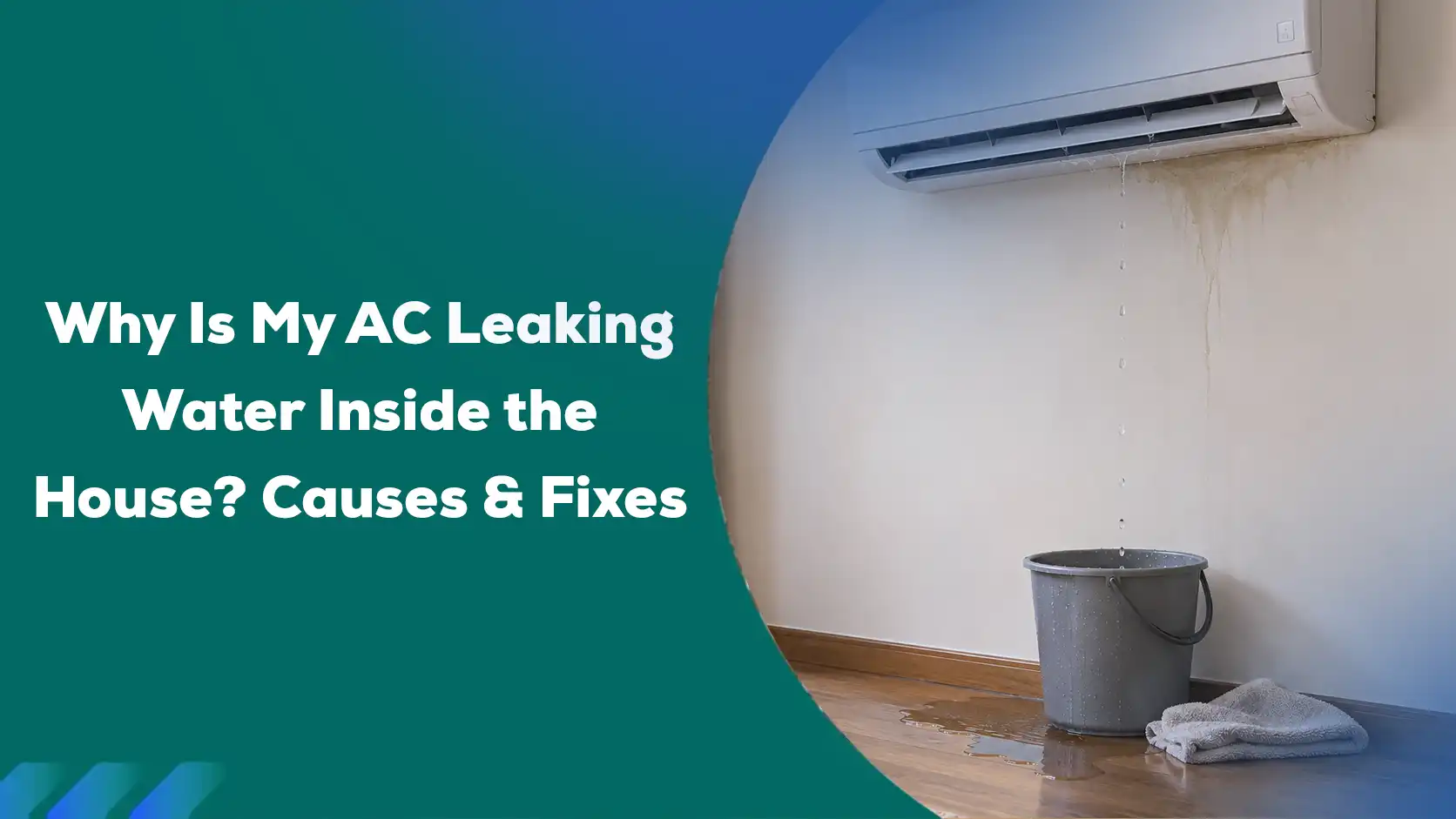
Why Is My AC Leaking Water Inside the House? Causes & Fixes
Your AC is leaking water inside because the condensate it collects has nowhere to go. In most Dubai homes the cause is a blocked drain pipe, a frozen coil that is thawing, a dirty filter or an indoor unit installed at the wrong angle. Every air conditioner pulls moisture out of the air and sends it outside through a drain. When that path is blocked, kinked or flooded, the water takes the next route, usually your wall, floor or ceiling.
Read on to tell the causes apart by where the water appears, run safe checks yourself, and spot when a leak has become a damage problem.
Key Takeaways
- A blocked drain pipe is the most common reason an AC leaks water indoors.
- Where the water appears points to the cause: front drips suggest a blocked drain or tilted unit, ceiling stains suggest a pan, pump or pipe problem above.
- Dubai’s humidity raises condensate volume, so a drain that coped in winter can overflow in summer.
- Switch the AC off if you see ice, water near electrical parts or a spreading stain.
- Dry wet materials within 24 to 48 hours to reduce mould risk.
The Main Reasons an AC Leaks Water Indoors
Blocked AC drain pipe
This is the leading cause. Dust, slime and algae build up inside the line over months. Once the pipe narrows, condensate backs up into the drain pan and spills over the front or sides of the unit. Gurgling, a musty smell, or a dry outdoor outlet while the indoor unit drips are common signs.
A technician clears the line with compressed air or a wet and dry vacuum, then flushes it and checks for sagging sections where water can sit. That combination is the lasting AC condensate leak fix. A cracked pipe or a poor tie-in to the building drain is a job for plumbing and drainage specialists.
Frozen evaporator coil
When the coil gets too cold, moisture freezes on it instead of running off. The ice melts when the unit cycles off and the pan cannot cope with the sudden volume. Typical triggers are restricted airflow, low refrigerant from a leak, or a weak fan motor. Topping up gas without finding the leak only delays the failure.
Dirty air filter
A clogged filter chokes airflow and can start the freezing cycle above. Dubai’s fine dust speeds this up, so a monthly check is the safer habit.
Wrong installation angle or damaged drain hose
Split units need a slight slope toward the drain outlet. If the unit sits level or leans away, water collects in the tray and drips from the front. A kinked hose, a sagging section or a loose joint does the same. If the leak began after installation or renovation work, ask for a slope check first.
Rusted drain pan, failed condensate pump or bare pipes
Ducted and cassette units hide a drain pan, and sometimes a small pump, above the ceiling. A rusted pan or dead pump can leak for weeks before anything drips, so the first sign is often a false ceiling stain. Damaged pipe insulation also lets moisture form on the pipe and drip onto the wall.

Why Dubai’s Humidity Produces So Much Condensate
An AC cools air over a cold coil, and the moisture in that air condenses on the coil. More moisture means more water for the drain to carry. The National Centre of Meteorology has forecast humidity of 90 to 95 per cent along the coast during humid spells.
Long running hours give slime time to grow in the drain, and fine dust feeds it. Khaleej Times has reported that an AC left off for a long period can bring a bad smell, water leaks or even mould when restarted, so an idle unit should be serviced before it runs again.
A drain that worked in January may not cope in August. A pre-summer AC check fits into a seasonal home maintenance routine and costs less than a ceiling repair.
Comparison Table: Leak Location, Likely Cause and Urgency
| Leak location | Likely cause | Urgency |
|---|---|---|
| Front or bottom of a split indoor unit | Blocked drain pipe or tilted unit | Medium. Fix within days |
| Wall below the unit | Loose or cracked drain hose, damaged pipe insulation | Medium. Fix within days |
| Ice on the coil or pipe, then dripping | Frozen coil from a dirty filter or low refrigerant | High. Switch off and book |
| Ceiling stain, or drip near a vent or cassette unit | Overflowing pan, failed pump or blocked line above the ceiling | High. Inspect the same day |
| Water near a socket, switch or distribution board | Water reaching electrical parts | Urgent. Isolate the power |
| A few drops at the outdoor drain outlet | Normal condensate | Low. No action needed |
Quick Checks You Can Do Before Calling a Technician
- Switch the AC off at the remote. If water is near sockets or the distribution board, switch it off at the breaker too and keep clear.
- Catch the water with towels and a tray.
- Check the filter. If it is clogged, wash or replace it, and let it dry fully before refitting.
- Look for ice on the coil or refrigerant pipe. If you see any, leave the unit off until it thaws. Do not scrape it.
- Run the AC and watch the outdoor drain outlet. A steady drip is normal. A dry outlet with a leak indoors points to a blocked line.
Do not open the casing, push wires into the drain line or run the AC with ice showing. If the filter and outlet look fine, call a technician.

When a Leak Means Real Damage: Ceiling, Wall and Mould
A leaking AC is dangerous when water reaches wiring, collects above a ceiling or runs for days. Wet wiring can cause a short circuit or shock, and a soaked ceiling can sag with little warning.
Ceiling and false ceiling
A slow leak above a false ceiling can run for weeks. Look for brown stains, bubbling paint, a sagging board or marks around light fittings. If a panel sags, keep people away and call at once. Soaked boards often need false ceiling repair or replacement, and once the area is dry, stained surfaces can be refinished with fresh paint.
Walls and floors
Running water lifts paint, swells skirting boards and soaks into plaster. Not every one of the wall cracks you find is moisture related, but damp patches beside them deserve a closer look.
Mould
A musty smell that returns whenever the AC runs is a warning sign, especially in closed ceiling voids. Our guide on why your AC smells bad in Dubai covers other odour causes.
Who pays in a rented home
Report any leak to the landlord quickly. Gulf News reports that landlords stay responsible for essential systems, minor upkeep is generally the tenant’s, and a tenant who ignores a small leak until it causes serious damage may be liable for the larger bill. Keep dated photos. Our breakdown of who pays for apartment plumbing repairs shows a similar split.
How We Fix and Prevent AC Leaks
A proper repair traces where the water really comes from. Our AC maintenance technicians work through the system in order:
- Trace the leak back to the drain line, pan, coil or pipe joint.
- Clear and flush the drain line, then clean the pan.
- Clean the filter and coil, and check airflow.
- Test refrigerant pressure, and find any leak before refilling.
- Correct the slope, replace damaged hoses or insulation, test any pump, and check surrounding ceilings and walls for moisture.
Heavy duct dust can add to the problem, so the price of cleaning the ducts is worth weighing if airflow is weak. Ducted and commercial systems follow a different routine under HVAC servicing.
| Task | How often | Who does it |
|---|---|---|
| Clean or replace filters | Every one to two months in cooling season, monthly in dusty areas | You |
| Check the outdoor drain outlet for a steady drip | Monthly in summer | You |
| Flush the drain line and clean the pan | Before summer, and again if you hear gurgling or smell mustiness | Technician |
| Inspect and clean the evaporator coil | Once a year, before peak summer | Technician |
| Full service before restarting | After every long shutdown | Technician |
An annual maintenance contract bundles these visits so none are missed, and the usual AC service cost is easier to plan for.
FAQs
Why is my air conditioner leaking water inside?
Because condensate cannot reach the outdoor drain. The usual reasons are a blocked drain pipe, a frozen coil, a dirty filter, a tilted unit or a damaged drain pan. Check the filter and outdoor outlet first, then call a technician.
How do I stop my AC from dripping water?
Switch it off, clean or replace the filter, let any ice thaw, and check that the outdoor outlet drips freely. If the drip continues, the drain pipe needs professional clearing. Fixing the cause stops it for good.
Is a leaking AC dangerous?
It can be. Water near wiring risks a short circuit or shock, a wet ceiling can sag, and damp materials can grow mould after 24 to 48 hours. Turn the AC off, keep clear of wet electrical points and book an inspection the same day.
Why is water coming out of my indoor AC unit?
The drain path is blocked, the coil is freezing and thawing, or the unit is tilted away from the drain outlet. Water should only leave through the outdoor drain pipe.
Is it normal for my AC to drip water outside?
Yes. A steady drip from the outdoor drain pipe is normal condensate. Water inside the home is not.
Book an AC Inspection
If your AC is already leaking, do not wait for the stain to spread. Hausfits technicians trace the source, fix the fault and check the ceiling and walls for damage. Call +971 52 2626 899 or send a request through the AC services page.