Why Is My Paint Peeling or Bubbling? Dubai Humidity Explained
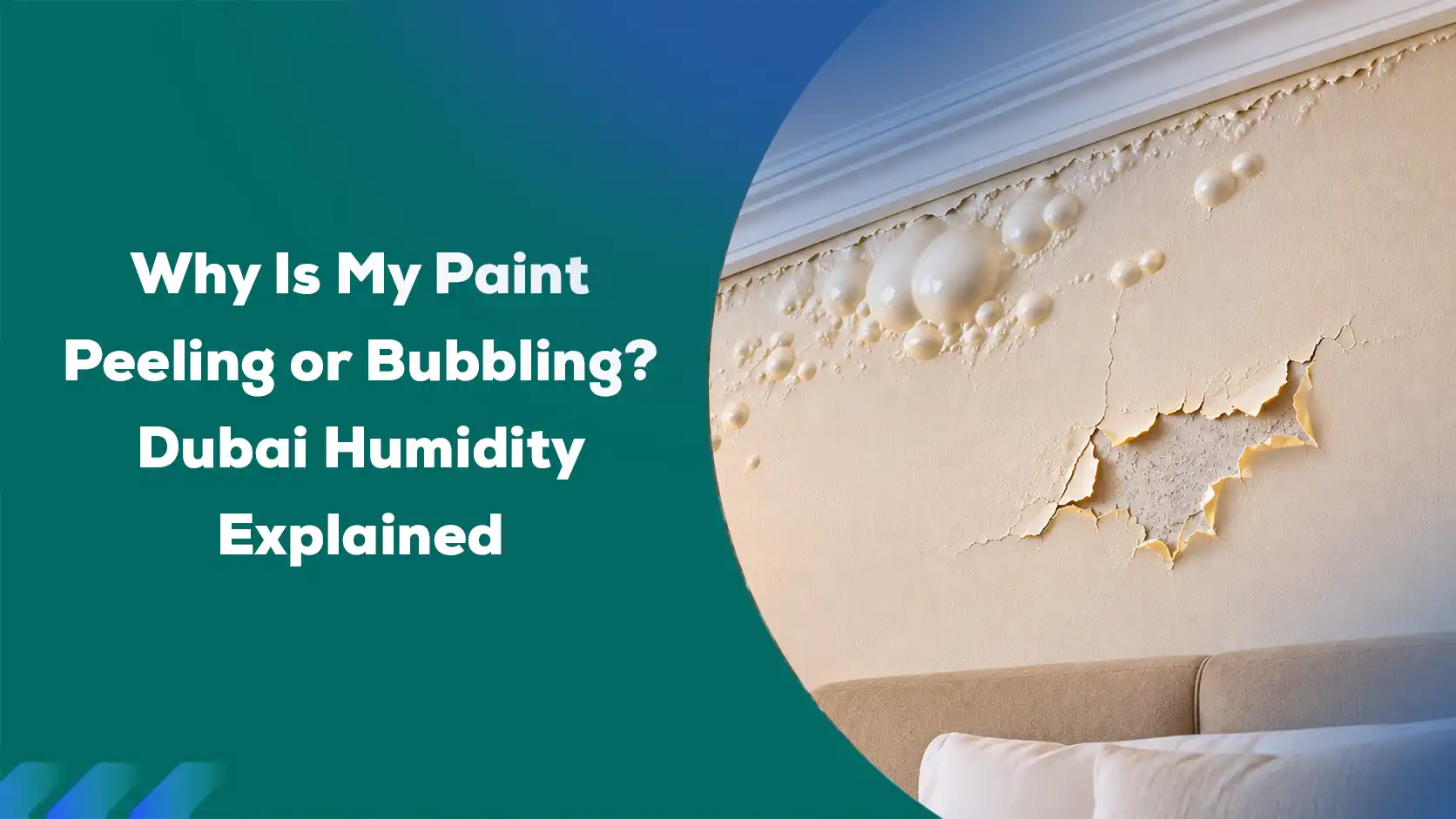
Paint peels off Dubai walls when moisture gets behind the film and the bond with the wall gives way. The moisture may come from humid air, a leaking AC drain or pipe, steam from a bathroom, or salt inside the plaster. Bubbling is the early stage of the same failure. Repainting without finding the source almost always brings the problem back, so this guide covers each cause, how to tell them apart, and how to repair the wall so the new coat holds.

Key Takeaways
- Moisture behind the paint is the most common reason paint peels off. Humidity alone is rarely the whole story.
- Cold AC walls, slow leaks, weak bathroom extraction and salt in the plaster are the usual Dubai triggers.
- Cut open a bubble. Damp plaster underneath means moisture. Another paint layer underneath means poor adhesion.
- Fix the source first, then scrape, dry, prime and repaint. Painting over a damp or loose surface repeats the failure.
- Use a moisture-resistant paint with a matching primer, and avoid painting when overnight humidity is climbing.
The Main Causes of Paint Peeling Off in Dubai
Four things cause most peeling here: moisture in or behind the wall, poor preparation, a paint that does not suit the surface, and salt.
Moisture in or behind the wall
When water vapour moves through a wall, it collects under the paint and pushes the film away. Sherwin-Williams describes interior peeling as exactly this: moisture penetrating the film until it lifts off the surface. In Dubai the vapour usually comes from a slow pipe or AC drain leak, steam in bathrooms and kitchens with weak extraction, or condensation on walls chilled by air conditioning. A wall held cold all day can sit below the dew point of the warm air around it, and water forms on the surface. If the damage sits near an AC unit or a ceiling corner, ask an AC technician to check the drain line and insulation before anyone picks up a brush.
Poor surface preparation
Paint needs a clean, dry, sound surface to grip. Dust, grease, chalky old paint, glossy finishes and unrepaired cracks all weaken the bond, and Sherwin-Williams lists painting over a dirty, wet or glossy surface among the leading causes of peeling. Quick turnaround repaints are where this tends to happen: the primer is skipped, the walls are barely sanded, and the first humid season lifts the coat.
The wrong paint for the surface
A basic emulsion on a bathroom ceiling, an interior paint on a sun-baked balcony wall, or a water-based topcoat over an old oil-based coat without a bonding primer will fail early. The layers do not flex or bond at the same rate, so they pull apart.
Salt in the wall
Salts in plaster, sand and cement dissolve in moisture, travel to the surface and crystallise under the paint. Dulux explains that growing salt crystals can build enough pressure to push a paint film off the wall. The sign is a white, powdery deposit on or behind the peeling area. Brushing it away helps only once the water source is fixed, because the salts return while moisture keeps moving through the wall.
Interior vs Exterior Peeling in Dubai
Interior peeling is mostly a moisture and ventilation problem. Exterior peeling is mostly an exposure problem.
Interior walls and ceilings
Look at where the damage sits. Peeling on a bathroom ceiling points to steam. Peeling at the base of a wall points to a pipe leak or damp rising from a wet room next door. Peeling behind wardrobes and beds on external walls points to still air and condensation. A pattern around AC vents or along a cooled wall suggests surface condensation.
Exterior walls and balconies
Villa facades, balcony walls and parapets take sun, humid air, dust and salt in the same week. Water enters through hairline cracks, tired sealant around window frames, parapet tops and irrigation spray that keeps hitting a boundary wall. Sherwin-Williams notes that exterior paint peels when a wet wall swells and loosens the film. Painting a hot, sun-struck wall causes a different failure, because the film dries too fast and blisters.

Comparison Table: Symptom, Cause and Fix
Use this table to match what you see on the wall with the most likely cause.
| Symptom | Likely cause | Fix |
|---|---|---|
| Small bubbles that show damp plaster when cut | Moisture escaping from the wall | Trace and stop the source, dry the wall, scrape, prime, repaint |
| Bubbles that reveal an older paint coat | Weak bond between layers, glossy or dirty surface | Scrape, sand to a dull key, prime, repaint |
| Large sheets peeling in bathrooms and kitchens | Steam and poor ventilation | Fit or repair extraction, use moisture-resistant paint |
| Peeling or wet patches near AC units and ceiling corners | AC drain leak or condensation | Repair the drain or insulation, dry fully, repaint |
| White powder under flaking paint | Salts crystallising behind the film | Dry-brush, fix the water path, use a masonry primer |
| Chalky, flaking exterior paint | Sun, weathering, aged or unsuitable coating | Clean, remove loose paint, prime, apply exterior-grade paint |
| Cracks and peeling at the same spot | Wall movement or failed filler | Rake out, fill with flexible filler, prime, repaint |
How to Repair Peeling Paint Properly
Repair in this order: stop the moisture, remove everything loose, let the wall dry, prime, then repaint.
- Find the source. Check for leaks, AC drain overflow and weak extraction. If the cause is not obvious, a moisture meter reading across the wall will show where it is damp.
- Let the wall dry. Run the AC, add airflow and use a dehumidifier if needed. Paint applied to a damp wall fails again.
- Scrape back to sound paint. Remove all loose film until the edges hold firm. Sherwin-Williams suggests testing adhesion in a 6 to 12 inch radius around the peeled area. Pressing tape on the edge and pulling it off is a quick check.
- Treat salts and mould. Dry-brush salt deposits and clean any mould before priming.
- Fill and sand. Fill damaged areas, feather the edges and dull any glossy paint.
- Prime the whole repair. Use a stain-blocking or masonry primer that suits the wall.
- Repaint in two coats. Allow full drying time between coats and keep the AC running to hold humidity down.
A small patch is a fair DIY job. If peeling covers a whole wall, returns after a repair or sits beside wet stains, professional painters can diagnose the cause before any paint goes on.

Choosing Humidity-Resistant Paint
Choose a water-based acrylic paint labelled as moisture, mould or humidity resistant, and pair it with a primer that suits the wall.
| Area | What to specify |
|---|---|
| Bathrooms and kitchens | Washable, moisture-resistant finish with mould-resistant film in satin or semi-gloss |
| Bedrooms and living areas | Premium acrylic emulsion, matt or silk, with a matching primer |
| Ceilings under AC or beside wet rooms | Anti-condensation or mould-resistant ceiling paint |
| Exterior walls and balconies | Exterior acrylic or elastomeric coating with UV and water resistance over a masonry primer |
| Walls with a salt history | Alkali-resistant masonry primer before the topcoat |
Conditions matter as much as the tin. Sherwin-Williams warns that exposing latex paint to dew, fog or high humidity soon after it dries can cause blistering. Schedule exterior work for dry days, avoid evenings and early mornings in autumn when overnight humidity rises, and keep the AC on indoors while the paint cures. A realistic repainting schedule also helps you decide between patching one wall and repainting the whole room.
FAQs
Why is my paint peeling off the wall?
Moisture behind the paint is the most common reason. It may come from a leak, AC condensation, steam or salts in the wall. Poor preparation, glossy surfaces and unsuitable paint also weaken the bond. Check whether the exposed wall is damp or powdery to narrow down the cause.
Does humidity cause paint to peel?
Yes, but usually with help. High humidity can soften a poorly cured or low-quality film, but peeling mostly happens when moisture is trapped behind the paint, the wall was painted damp, or a cold AC wall forms condensation. Fixing ventilation and moisture sources stops it.
How do I fix bubbling paint?
Cut open one bubble to see what is underneath. Damp plaster means you must find and stop the moisture first. Another paint layer means poor adhesion. Either way, scrape off all loose paint, sand, prime and repaint once the wall is completely dry.
How do I stop paint from flaking?
Control moisture, prepare the surface and use the right products. Fix leaks, ventilate wet rooms, remove dust and loose paint, prime, and use a humidity-resistant paint. On exterior walls, seal cracks and use an exterior-grade coating.
Can I paint over peeling paint?
No. New paint cannot hold onto a loose layer and will lift with it. Scrape back to firmly attached paint, feather the edges, prime, then repaint.
Book a Repaint Quote
If your walls keep peeling after repainting, the cause is still inside the wall. The Hausfits painting team can inspect the surface, recommend the right preparation and primer, and repaint with products suited to Dubai’s climate. Homes in Jumeirah Village Circle can also get a site visit through the local renovation and maintenance team in JVC. Send photos of the affected walls and request your quote today.