Apartment Renovation Guide in Dubai: Steps, Rules & Budget
To renovate an apartment in Dubai, get your building’s No Objection Certificate (NOC), secure a Dubai Municipality or zone authority permit if the work touches walls, plumbing, electrical or air conditioning, and hire a licensed contractor to carry it out. Plan on AED 25,000 to AED 60,000 for a light refresh, AED 120,000 to AED 350,000 for a full mid-range renovation, and 6 to 16 weeks on site once approvals are cleared.
Apartments carry more rules than villas because your work shares walls, floors, risers and lifts with other owners. This guide covers the steps in order, the approvals each stage needs, what tenants can and cannot change, and where budgets and schedules slip.
Key Takeaways
- Approval comes first. Most managed buildings want an NOC before any work. Changes to walls, plumbing, electrical or AC also need an authority permit.
- Tenants need written consent. Dubai tenancy law bars changes to a rented flat without the landlord’s permission.
- Budget: AED 25,000 to AED 60,000 for a light refresh and AED 120,000 to AED 350,000 for a full mid-range job. Add 10 to 15 percent as contingency.
- Time: 6 to 16 weeks on site for a full renovation, plus the weeks approvals take before work starts.
- Delays come from three places: late NOCs, long-lead materials and design changes after demolition.
Step-by-Step Apartment Renovation Process
An apartment renovation in Dubai runs in seven steps: scope, building rules, contractor, approvals, strip-out and services, finishes, and handover. The order matters because every stage hides the one before it. The home renovation checklist on our blog splits the same sequence into nine phases with typical durations.
1. Set the scope and the budget
Walk through every room and separate must-do work from nice-to-have upgrades. Ask contractors for an itemised bill of quantities (BOQ) instead of a lump sum, so quotes can be compared line by line. If the number looks tight, this guide to renovating on a budget in Dubai shows which savings are safe.
2. Find out who governs your building
Your tower may fall under Dubai Municipality, the Dubai Development Authority or Trakhees, and a master developer or owners’ association adds its own rules on working hours, lift bookings, deposits and insurance. Property Finder’s permit guide explains that approval runs on two tracks, one with the government regulator and one with building management. Ask for the building’s fit-out guidelines before you design anything.
3. Hire a licensed contractor
Check the trade licence and the Dubai Municipality classification, then ask who prepares the drawings and files the permits. Fit-out rules differ tower by tower, so a contractor already working in your area, such as a team handling renovation and maintenance in Business Bay, will know the paperwork.
4. Clear approvals before demolition
Submit the NOC first, because the authority submission usually depends on it. Then file the permit with stamped drawings. Do not mobilise until both are issued. Starting early risks stop-work orders, fines and a forced rebuild.
5. Strip out, then run services and waterproofing
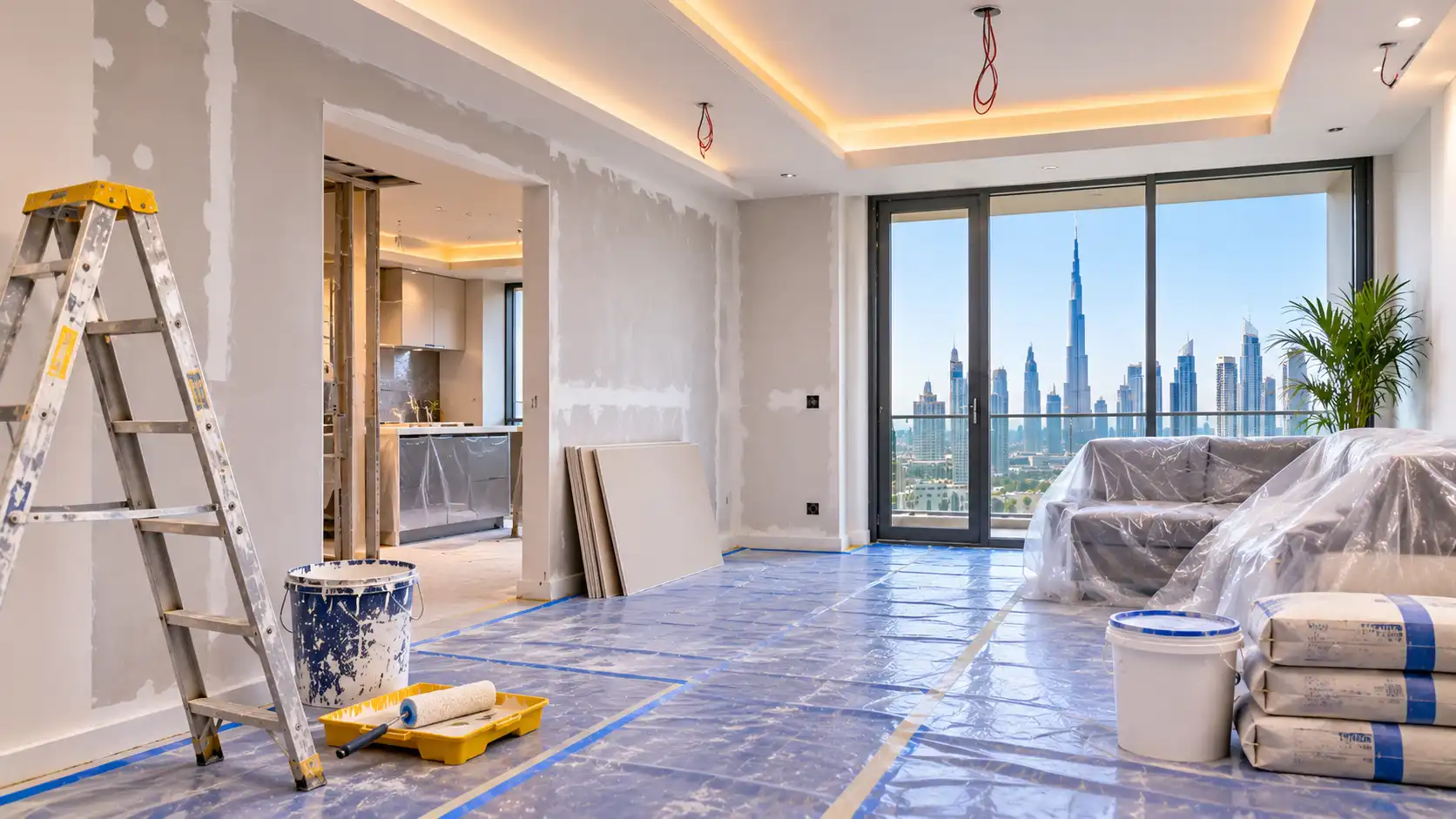
Demolition shows the real condition of pipes, wiring and slabs. First-fix plumbing, electrical and AC ducting follow, then waterproofing in wet areas. A failed membrane in an apartment damages the unit below, so witness a 24-hour flood test before tiling starts. This bathroom renovation guide covers wet-area sequencing in more detail.
6. Install ceilings, flooring, joinery and paint
Ceilings and joinery frames go in first, then tiles and flooring, then paint and fittings. Authorities and owners’ associations watch waterproofing and acoustic performance when floors change, so confirm the approved underlay before ordering.
7. Snag, test and close the file
Walk the apartment with a defects list and test every socket, tap, drain and AC unit. Photograph pipework and cables before walls close. Collect as-built drawings, warranties and the permit closure, which releases your building deposit.

Building & Developer Approvals You’ll Need
You usually need two approvals: a No Objection Certificate (NOC) from the developer, owners’ association or building management, and a permit from the authority that covers your area. Painting and similar cosmetic work often needs only the building’s consent. Moving walls, wet areas or services needs both.
| Approval | Issued by | When you need it | Typical timing |
|---|---|---|---|
| Building or community NOC | Developer, owners’ association or building management | Almost every renovation in a managed tower, including cosmetic work | 7 to 14 days |
| Building modification permit | Dubai Municipality, or the Dubai Development Authority or Trakhees by zone | Moving walls, wet areas or ceilings, and plumbing, electrical or AC changes | 10 to 15 working days for simple scopes |
| DEWA approval | DEWA, applied for by the contractor | Changes to electrical load, meters or water connections | Filed alongside the main permit |
| Fire safety approval | Dubai Civil Defence | Changes to alarms, sprinklers or escape routes | Varies with scope |
| Final inspection and closure | Authority and building management | After completion, to release your deposit | 5 to 10 working days |
Fees are small next to the build. Property Finder’s 2025 estimates put permit costs for an interior-only apartment job at AED 1,500 to AED 2,500, rising to AED 2,500 to AED 4,000 with MEP changes. Building deposits commonly run AED 2,000 to AED 5,000 and are refundable if common areas stay undamaged. Submission packs usually include the trade licence, insurance, method statement, stamped drawings and your ID and title deed. Dubai Municipality publishes its building permit procedures for contractors and consultants.
Comparison Table: Scope, Timeline and Budget Range
A light refresh costs from about AED 25,000 and takes three to four weeks. A full mid-range renovation costs AED 120,000 to AED 350,000 and takes 6 to 16 weeks on site. Timelines count site work only.
| Scope | What it covers | Typical time on site | Budget range (AED) |
|---|---|---|---|
| Light refresh | Painting, minor repairs, fixture and lighting swaps, limited flooring | 3 to 4 weeks | 25,000 to 60,000 |
| Targeted upgrade | One kitchen or bathroom, new flooring, paint, selected joinery | 4 to 8 weeks | 60,000 to 180,000 |
| Full mid-range renovation | Kitchen, bathrooms, flooring, ceilings, lighting, paint and MEP coordination | 6 to 16 weeks, shorter for studios and one-bedrooms | 120,000 to 350,000 |
| Premium or luxury | Custom joinery, stone surfaces, upgraded bathrooms, smart systems, layout changes | 16 weeks or more, driven by lead times | 250,000 to 600,000+ |
These figures follow Binghatti’s 2026 cost guide, which also notes that per-square-foot rates run from about AED 60 for cosmetic work to AED 500 or more for premium renovation. That rate loses accuracy when kitchens and joinery dominate, so ask for a BOQ. Kitchens run from about AED 15,000 to AED 120,000 or more, and a mid-range bathroom from about AED 8,000 to AED 40,000. The home renovation cost guide and the bathroom cost breakdown show what moves those numbers.
What You Can and Can’t Change in a Rented Flat
A tenant in Dubai cannot alter a rented flat without the landlord’s permission and any licences the authorities require. Treat even repainting as a change and get consent in writing.
| Change | What you need |
|---|---|
| Repainting, wallpaper, light fittings, curtain rails | Landlord’s written consent, plus a clause on whether you repaint at move-out |
| New flooring, false ceilings, built-in wardrobes | Landlord consent and building NOC. A municipality permit may apply |
| Adding partitions or removing walls | Landlord consent, NOC and a municipality permit. Dubai has cracked down on unapproved partitions |
| Plumbing, electrical or AC alterations | Landlord consent, NOC and authority or DEWA approval through a licensed contractor |
| Anything that endangers the building and cannot be reversed | Not allowed. Article 25 lets a landlord seek eviction in that case |
Article 21 requires tenants to return the flat in its original condition apart from normal wear, while Article 23 stops tenants from removing improvements they made unless the parties agree otherwise. Put in writing whether the landlord wants the flat restored or keeps the upgrade. This is general information, not legal advice.
How to Avoid Delays & Surprise Costs
Most delays come from three places: approvals started late, long-lead materials ordered late, and design changes after demolition. Surprise costs come from items the quote never listed.
- Start the NOC first. Chasing a building NOC in demolition week is the classic delay. Typical turnaround is seven to 14 days, so submit before you book trades.
- Order long-lead items early. Imported stone, bespoke kitchens and specialist glass can take eight to twelve weeks. Order them while approvals run.
- Freeze the design before submission. A changed drawing restarts the review, and a wall moved after first fix unwinds three completed trades.
- Read what the quote excludes. Permit fees, consultant drawings, deposits, debris removal, 5 percent VAT and temporary accommodation often sit outside the headline price. Hold 10 to 15 percent as contingency.
- Pay by stage, not by date. Release money against completed work and keep a retention until snagging is signed off.
- Plan for neighbours and for living there. Book the service lift, protect common areas and warn adjacent units. If you will stay put, this guide to living in your home during renovation covers dust, water and noise.
FAQs
How do I renovate an apartment in Dubai?
Set a scope and budget, get the building’s NOC, hire a licensed contractor and obtain the authority permit if you alter walls or services. Then build in order: strip-out, services, waterproofing, finishes and snagging. Do not start demolition until both approvals are in hand.
Do I need approval to renovate a flat in Dubai?
Yes. Most managed buildings require developer or owners’ association approval, even for cosmetic work. Structural, plumbing, electrical or AC changes also need an authority permit, and tenants need the landlord’s written consent under Dubai tenancy law.
How long does an apartment renovation take?
A full renovation of a studio or one-bedroom takes about 6 to 10 weeks on site, and a two or three-bedroom about 8 to 16 weeks, according to Binghatti. Design, approvals and material lead times can add several weeks before work begins.
How much does it cost to renovate an apartment in Dubai?
Planning ranges run from about AED 25,000 for a light refresh to AED 120,000 to AED 350,000 for a full mid-range renovation, and AED 250,000 or more for premium work. Add VAT, permit fees, deposits and contingency.
Start Your Apartment Renovation
Hausfits runs that sequence for apartment owners and tenants, with a single team responsible from scope and NOC submissions to snagging. Book a free site visit with the apartment renovation and maintenance team or call +971 52 2626 899, and bring your floor plan with a rough list of changes.